


You know that moment when you're stood in Manchester with a menu in hand, spotting menu claims of local origin and wondering if it means a real relationship with a nearby farm, or just a tidy line for the front page? That question illuminates the essence of this culinary approach, because the concept can describe everything from a short supply chain to a vague bit of menu theatre. In a city full of independent kitchens, it's worth learning how to tell the difference.
Table of Contents
- What is Farm to Table Dining Really?
- The Core Principles and Delicious Benefits
- How to Spot an Authentic Farm to Table Restaurant
- Manchester's Top Farm to Table Experiences
- Discover Manchester's Hidden Gems with a Twist
- Your Next Steps into Local Dining
What is Farm to Table Dining Really?
The cleanest way to think about farm to table dining is simple. It's a movement that prioritises locally sourced food and a direct relationship between diners and producers, with restaurants often buying straight from farmers, wineries, breweries, ranches, fisheries, farmers' markets, CSAs, or even growing food themselves. It usually includes traceability, which means guests are told where ingredients come from, not just that they're “local” (Farm-to-table).
Local doesn't always mean the same thing
A lot of confusion starts here. A dish can be called local without telling you much at all, while a proper farm-to-table kitchen usually gives you names, places, and a visible supply chain. One useful shorthand often used in discussions of the movement is the “within about fifty miles” benchmark, which reflects the idea of eating what's grown nearby and in season rather than relying on long-distance shipping (EBSCO research summary).
That's why the phrase matters so much in Manchester. The city's best independent venues often care less about sounding trendy and more about being able to explain who grew the carrots, who raised the meat, or which bakery supplied the bread. If staff can tell you the story behind a dish, you're usually looking at something closer to its origins.
Why the definition matters to diners
Once you understand the definition, you can read a menu more carefully. Traceability means accountability, and accountability usually leads to better questions, fresher planning, and more honest cooking. It's also why farm-to-table dining feels different from generic “fresh food” branding, because it's built on relationships instead of slogans.
You'll see that logic show up again in the section on how to identify genuine farm-to-table. For now, the key point is that farm-to-table isn't just about geography. It's about knowing where your food came from, who handled it, and how tightly the restaurant is tied to the people producing it.
The Core Principles and Delicious Benefits
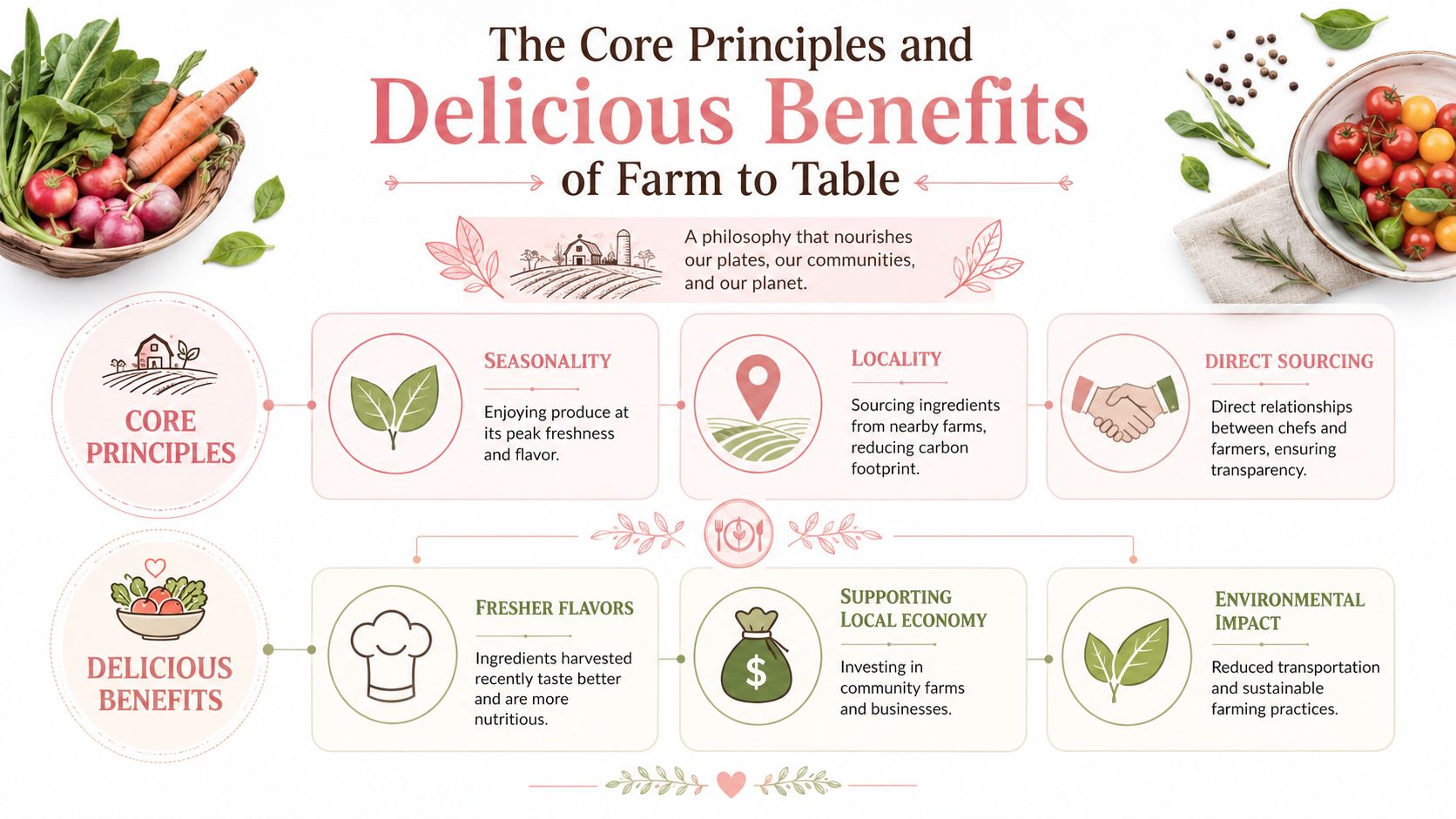
The idea works because three simple principles pull in the same direction. Seasonality keeps ingredients at their best, locality shortens the journey from field to plate, and direct sourcing gives chefs more control over quality and provenance. That combination is why farm-to-table often tastes brighter, feels more personal, and supports the places that feed a city like Manchester.
Why the UK context matters
The model isn't floating above normal business life, it's tied to real farm economics. The UK government's Farm Diversification Survey reported that around 53% of farms had some form of diversified activity in 2021–2022, with food and drink processing, hospitality, and direct retailing among the most common routes into higher-value local food sales (Market Intelo reference to UK diversification data). That matters because farm-to-table dining doesn't sit outside the rural economy, it's part of how many farms now earn more from what they grow or make.
For diners, that means your meal can support more than a kitchen. It can support a butcher who works with regional farms, a grower in Cheshire, or a producer who sells directly rather than through a long chain of middlemen. The dining room becomes one stop in a wider local food network.
Why people taste the difference
Freshness is the most obvious benefit, but it isn't the only one. Seasonal produce is usually handled less, stored for less time, and cooked closer to when it was harvested. That gives chefs more to work with and guests a dish that feels more alive on the plate.
There's also the waste angle. Restaurants built around variable harvests need tighter planning, and practical resources such as how to reduce restaurant food waste are useful because they line up with the same discipline farm-to-table kitchens already need. If the menu changes with the market, the kitchen has to stay nimble.
Practical rule: the fewer steps between farm and fork, the more clearly the kitchen can control freshness, waste, and story.
For Manchester diners, that's the appeal. You're not just paying for an ingredient list. You're paying for a restaurant that's built around better timing, tighter relationships, and food that has less reason to sit around losing its edge.
How to Spot an Authentic Farm to Table Restaurant
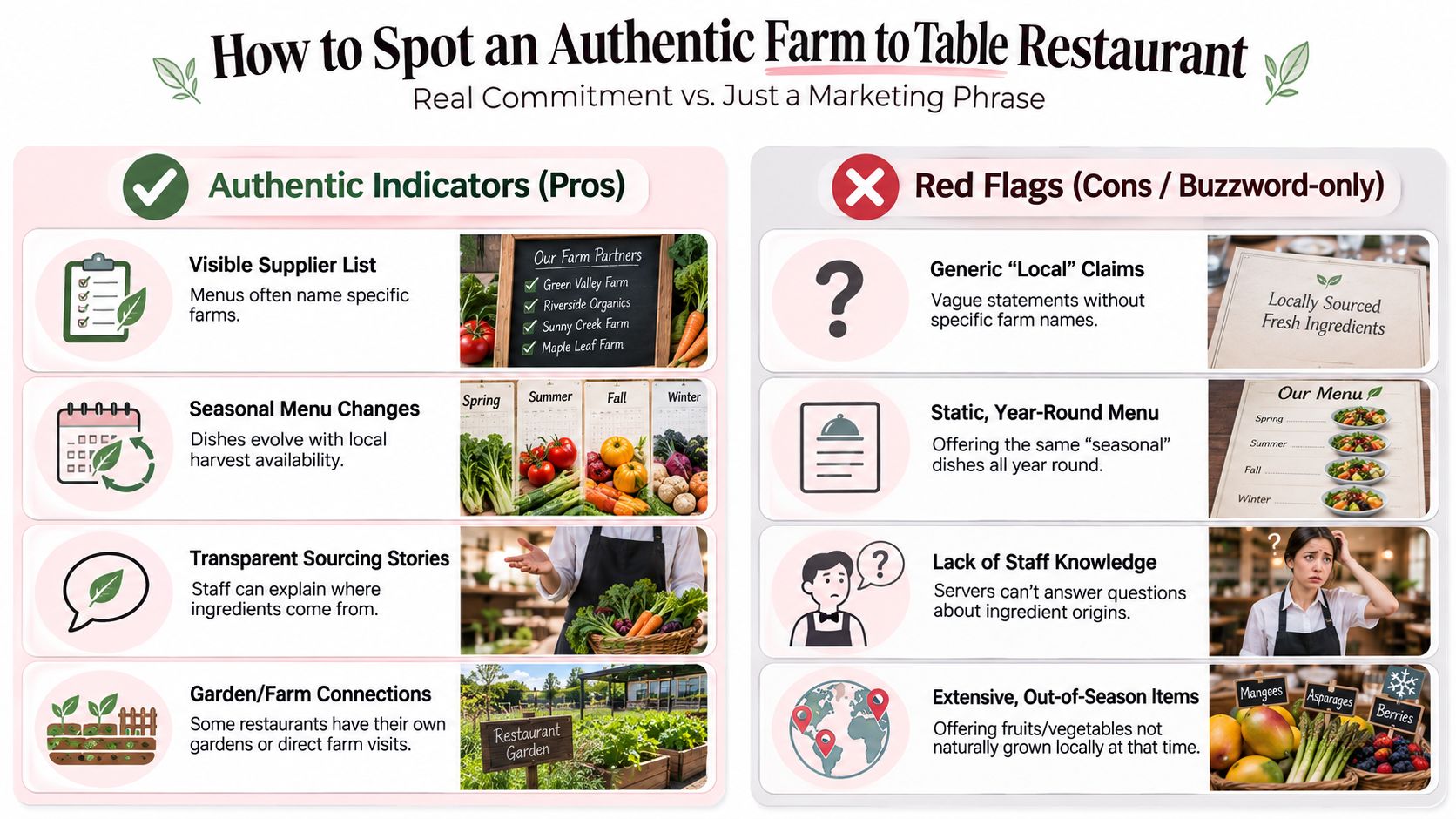
A genuine farm-to-table restaurant usually gives itself away if you know what to look for. The best signs are practical, not flashy. Menus change with the harvest, staff can name suppliers, and the dishes feel built around what's available rather than what sounds fashionable.
Green flags that usually mean it's real
| Authenticity Checklist Real Deal vs. Marketing Fluff | |
|---|---|
| Green Flags | Look for these |
| Named suppliers | Farms, fisheries, bakers, or dairies appear on the menu |
| Frequent menu changes | The kitchen adapts to seasonal availability |
| Confident staff answers | Servers can explain where ingredients came from |
| Visible flexibility | Dishes change when a crop is late or a delivery shifts |
The menu itself is often the easiest clue. Farm-to-table menus commonly change seasonally, sometimes weekly or even daily, because chefs build dishes around what local farms can supply at that moment (Primal Kitchen). If a restaurant calls something “seasonal” but serves the same asparagus plate in winter, that's not a great sign.
Questions worth asking at the table
You don't need to interrogate the server. A calm, friendly question tells you a lot. Ask where the beef comes from, which farm supplied the greens, or whether the menu changes with the local harvest. If the team answers quickly and specifically, you're probably in a kitchen that takes sourcing seriously.
Good sign: staff talk about producers the way they'd talk about regulars, by name, with real familiarity.
This is also where dietary needs can fit naturally. In many kitchens, especially those built on simple seasonal cooking, it's easier to identify meat, stock, or garnish sources and ask about halal-friendly options or substitutions. A restaurant that already knows its producers well is often better placed to explain exactly what's in the dish and what can be adjusted.
Red flags that should make you pause
| Authenticity Checklist Real Deal vs. Marketing Fluff | |
|---|---|
| Red Flags | Be wary of these |
| Generic “local” language | No farms or producers are named |
| Static menu | “Seasonal” dishes never seem to change |
| Vague staff knowledge | No one can explain ingredient origins |
| Out-of-season overload | The menu leans on ingredients that don't match the time of year |
If you want the full neighbourhood context behind where independent food culture thrives, this guide to independent restaurants in Manchester is a handy companion. It sits nicely alongside the farm-to-table mindset, because independence often gives chefs the freedom to source more directly and cook with integrity.
One more useful angle is loyalty. Restaurants that can tell a clear sourcing story tend to give guests a stronger reason to come back, which is why it makes sense to read up on ways to boost restaurant customer loyalty if you're thinking about the business side of the dining room as well as the plate. When the story is specific, the meal feels more memorable.
Manchester's Top Farm to Table Experiences
Manchester doesn't have to copy a country farm to feel close to the source. The city's strongest independent venues often lean into regional suppliers, seasonal cooking, and no-nonsense provenance, especially around places like the Northern Quarter, Ancoats, and Chorlton. That fits the wider UK trust picture too, since the Food Standards Agency's 2021 Food and You 2 survey found that 69% of adults in England, Wales and Northern Ireland were confident food sold in shops and served in restaurants was safe, while 86% reported taking some action related to food safety or quality when buying or eating out (Startup Financial Projection summary of FSA data).
What local dining looks like in practice
Manchester's best farm-to-table-style meals usually don't announce themselves with big slogans. They show up in small, consistent choices. A kitchen might highlight a named butcher, a bakery in Ancoats, or a seasonal vegetable plate that changes when the market changes.
That trust-based approach matters in a city like this because diners respond well to specificity. If a restaurant tells you exactly where its tomatoes, beef, or cheese came from, the meal feels more grounded. It's the difference between a generic claim and a real local story.
The kind of places worth seeking out
In the Northern Quarter, look for restaurants that keep the menu tight and build around a handful of suppliers rather than trying to be everything to everyone. In Ancoats, the food scene often rewards places that let bread, veg, and small-batch ingredients do the heavy lifting. In Chorlton, the mood is often more relaxed, but the same sourcing habits show up in kitchens that care about seasonality and local relationships.
A useful way to judge any place is to watch how the menu behaves over time. If the kitchen changes dishes without losing consistency, that usually means the chef is planning around real produce instead of forcing it into a fixed template. The best meals in Manchester often feel like they could only have happened in that kitchen, on that week.
A short video can also help you recognise that atmosphere before you book.
Why these spots stand out
What makes these restaurants special isn't just the ingredients. It's the confidence to let ingredients lead. When a kitchen is working with local suppliers, the menu tends to feel more seasonal, more honest, and more tied to the city around it.
If you're booking for a date, a birthday, or a night out with friends, that sort of dining gives the evening a bit more texture. You're not just choosing a meal. You're choosing a place that tells you where your dinner came from and why it looks the way it does.
Discover Manchester's Hidden Gems with a Twist
The spirit behind farm-to-table dining is discovery. You follow the food, you trust the route, and you end up somewhere that feels a bit more personal than a standard dinner booking. That's exactly why a clue-led food experience can work so well in Manchester, especially if you'd rather uncover hidden independent venues than spend an evening scrolling review sites.
A more playful way to find independent food
Food Escapes turns that search into a game played on WhatsApp. You solve clues, move between three hidden-gem food stops, and the food is included in the ticket, which makes the experience feel less like logistics and more like a proper outing. It's a neat fit for people who like the idea of local sourcing, because the format naturally spotlights independent restaurants with shorter supply chains and closer supplier relationships, which is the same logic behind hidden gems in Manchester.
That also makes it useful for mixed groups. Couples can use it as a date, friends can make a night of it, and tourists get a guided way into parts of the city they might never have found on their own. It works especially well when nobody wants a repetitive pub crawl or a dinner that feels too formal.
Best part: the clues do the navigating, so you can focus on eating, chatting, and actually noticing the city.
Why it suits this kind of dining
Farm-to-table and short-chain dining both depend on curiosity. You're asking where things come from, who made them, and what's happening locally right now. A food tour built around independent stops gives you a live version of that mindset without asking you to do all the legwork.
If you want the broader city context on food-led days out, this look at food tours in Manchester shows how the city has room for experiences that are social, guided, and still local. It's a useful next step if you're planning a birthday, a team outing, or a low-pressure way to try somewhere new.
Who it suits
- Couples on a date: The clue-solving gives the evening a bit of chemistry without making it awkward.
- Groups of friends: Everyone gets involved, and nobody has to organise multiple bookings.
- Visitors to Manchester: It's a fun route into the city's independent food scene.
- Anyone who likes food with a story: The stops feel more memorable when the journey is part of the experience.
The bigger point is simple. If you like the values behind farm-to-table dining, a guided food adventure can make those values easier to experience in real life, without turning the evening into homework.
Your Next Steps into Local Dining
Farm-to-table dining makes the most sense when you treat it as more than a label on a menu. It rests on traceability, seasonality, and kitchens that work closely with producers instead of relying on an anonymous supply chain. In Manchester, that often shows up in independent restaurants, menus that change with what is available, and staff who can explain where the ingredients came from without sounding rehearsed.
A good next move is simple. Use the authenticity checklist, ask one or two sourcing questions, and notice how often the menu shifts. If a restaurant can talk clearly about growers, fishmongers, or local suppliers, that usually tells you more than a glossy promise ever could.
If you want to make the process more fun, a clue-based food outing can give you the same local focus without making dinner feel like homework. It also suits people who want to explore Manchester's independent scene with a bit of structure. For a practical look at the business side of drawing diners in, the guide to top marketing strategies for restaurants offers useful context.
For a different way to keep discovering the city, Manchester food tours can be a good companion to your own shortlist. They work especially well if you want your next meal to feel local, social, and a little more memorable than the usual booking.
Food Escapes turns local dining into a guided adventure, with clue-solving, hidden independent stops, and food included along the way. If you're curious about Manchester's farm-to-table spirit and want a fun way to taste it for yourself, visit Food Escapes and plan your next food-led outing.

0 comments