


Organising a group day out sounds easy until everyone starts listing requirements. One person wants an independent restaurant, another wants something active, someone else needs a halal-friendly option, and at least one member of the group would rather avoid an alcohol-led night entirely. Then you've got the practical questions: how much walking is involved, will the weather ruin it, can everyone afford it, and who's booking?
This guide brings together 20 food-led and social group outing ideas for friends, couples, families with older children and corporate teams. You'll find low-effort plans, rainy-day options, flexible outdoor ideas, short city experiences and outings that can fill a whole day.
The strongest choices balance energy level, walking, food, accessibility, group size and booking effort. A passive dinner is simple, but it may not help strangers mingle. A cooking class creates collaboration, but it needs more concentration. A market offers freedom, while a guided route gives you a clearer structure.
For a distinctive Manchester group outing, Food Escapes stands out for combining clues, independent restaurants and city exploration in one WhatsApp-based experience. It won't suit every group, especially if some guests dislike puzzles or walking, but it's a compelling choice for friends, tourists, team socials and anyone who wants more than a meal at a table.
Table of Contents
- 1. Food-Led Urban Exploration Adventures
- 2. Collaborative Cooking Classes and Supper Clubs
- 3. Themed Food Crawls and Neighbourhood Tastings
- 4. Picnic and Outdoor Dining Experiences
- 5. Restaurant Takeovers and Private Dining Events
- 6. Market and Street Food Festival Experiences
- 7. Brewery, Winery and Distillery Tours with Group Tastings
- 8. Supper Clubs and Underground Dining Events
- 9. Immersive Dining Experiences with Interactive Elements
- 10. Food-Focused Walks and Guided Neighbourhood Tours
- 10-Point Comparison of Group Food Outing Ideas
- Make Your Next Group Outing Count
1. Food-Led Urban Exploration Adventures
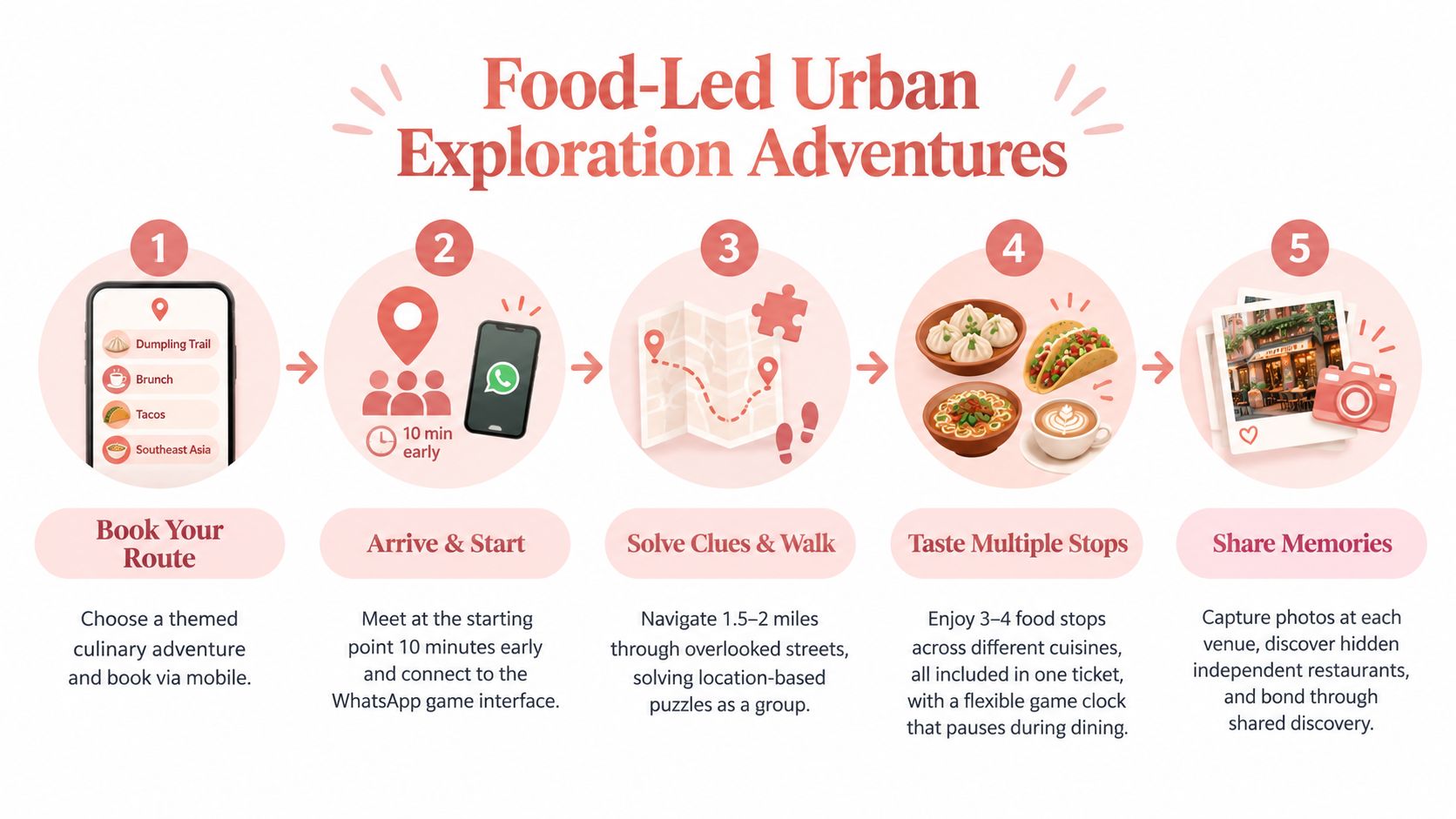
A food-led urban exploration adventure turns a meal into a moving city experience. Instead of arriving at one venue and staying there, your group follows a route through a neighbourhood, discovers independent restaurants and solves clues that reveal the next stop.
Food Escapes' Dumpling Trail in Manchester's Northern Quarter is a strong example. Groups explore independent dim sum and Asian fusion venues while working through location-based puzzles. Other options include the Rise & Dine Brunch escape, which combines morning exploration with three brunch stops, plus themed routes such as Indian Feast and Streets of the East.
This format works particularly well for birthdays, date groups, visitors and corporate teams that need natural conversation starters. Solving clues gives quieter guests something to contribute, while the food stops create proper breaks rather than turning the entire outing into a timed race. Manchester already has established multi-stop food experiences, including a Northern Quarter safari visiting seven food businesses and showcasing independent bakeries, speciality coffee roasters and restaurants serving Pakistani, Thai and Vietnamese food, as described by this Northern Quarter food safari guide.
Make the route run smoothly
Book Tuesday to Thursday if you want quieter restaurants and more breathing room for clue-solving. Expect roughly 1.5 to 2 miles of walking, so comfortable shoes matter.
- Brief the group: Explain that solving puzzles is part of the experience, not an optional extra.
- Arrive early: Get to the starting point 10 minutes before the slot so everyone can understand the game interface.
- Choose a navigator: One person should keep the group moving between clues and venues.
- Capture the day: Take a photo at each stop for a useful visual record of the route.
2. Collaborative Cooking Classes and Supper Clubs
Choose a cooking class when your group needs an activity that creates conversation without forcing anyone into awkward icebreakers. Everyone has a job, the instructor provides direction and the final meal gives the group a satisfying finish.
A Thai curry class can take participants from grinding a curry paste to cooking the complete dish. Indian street-food sessions might focus on dosa or samosa preparation, while pasta workshops teach both fresh pasta and the sauce that brings it together. Vegan and plant-based classes are particularly useful for groups with varied diets because the menu starts with inclusivity rather than treating it as a last-minute adjustment.
Cooking classes suit birthdays, hen and stag groups, workplace socials and friends who enjoy learning together. They're more hands-on than a restaurant booking, so they demand attention and may not work for guests who want a completely relaxed afternoon. The reward is a stronger sense of shared achievement, particularly when the group chooses a cuisine outside its usual comfort zone.
Give everyone a role
Arrive 15 minutes early to learn the kitchen layout and settle nerves. Assign roles according to comfort, but pair less confident cooks with people who've got more experience. Don't give one capable person every important task, or the class becomes a demonstration rather than a group activity.
- Set expectations: Tell guests whether they'll be standing, chopping, mixing or working around shared equipment.
- Share responsibility: Divide preparation, cooking, plating and clearing roles across the group.
- Ask for recipes: Request them before or after the class so everyone can recreate the dishes at home.
- Photograph the result: Take pictures before the food disappears.
For a mixed-preference group, ask about allergies and dietary requirements before booking. A good provider should explain substitutions clearly and confirm whether the whole class can follow an alternative menu.
3. Themed Food Crawls and Neighbourhood Tastings
Choose a crawl when your group wants food discovery with a clear route and room for conversation. Several venues, shared plates and short walks create a more social afternoon than a single formal dinner, while avoiding the effort of planning a competitive activity.
Manchester gives you strong themes to build around. A Northern Quarter dumpling trail can focus on independent Asian restaurants. A Chinatown route might move from dim sum to noodles and regional specialities. Coffee groups can pair roasters with pastry stops, while vegan guests can visit plant-based venues. Halal-friendly groups can compare Muslim-owned restaurants around Deansgate, Chester Street, Wilmslow Road and Cheetham Hill Road.
For halal groups, plan around a theme rather than settling for one restaurant. Visit Manchester's halal dining guide covers the city's halal food scene, and TheFork's Manchester halal restaurant listings show choices around Spinningfields, Greengate, Chinatown and Canal Street. Use those starting points to check opening times, menus and locations before fixing the route.
Match the crawl to the group
Keep the first tasting modest, particularly if later stops are food-led. Tell venues about allergies in advance, decide whether plates will be shared, and set a meeting point in case anyone falls behind.
- Leave room for every stop: Eat lightly beforehand, but do not arrive exhausted or starving.
- Plan for Manchester weather: Comfortable shoes and weatherproof layers matter on a walking route.
- Make payment simple: Carry a backup method because independent venues may not accept every option.
- Give each stop a purpose: Ask who runs the venue, which dishes define it and what makes the menu distinctive.
- Control the pace: Book the busiest stop first or arrive early enough for the group to settle.
A themed crawl suits foodies, visitors and friendship groups who want guided discovery without a formal tour. Keep the route compact for a short outing, or add local history and neighbourhood context when tourists have more time. Choose passive dining for maximum relaxation, a guided route for reliable context, or an interactive city adventure when the group wants to make decisions and explore together.
4. Picnic and Outdoor Dining Experiences
Choose a picnic when the group wants flexible timing, fresh air and control over spending. The setting does much of the work, so plan more than crisps on damp grass. Local bread, deli food, fruit, pastries and drinks turn a simple stop into a proper shared meal.
Match the location to the outing. Manchester groups can take locally sourced deli food beside the canals, or spend longer at Heaton Park with artisan produce and outdoor games. A Peak District picnic adds a scenic walk, while a Cornish-inspired beach spread suits coastal visitors who want seafood. Urban gardens provide greenery without committing to a long journey.
Families, daytime dates and budget-conscious friendship groups get the most from this format. It also suits short daytime plans better than formal celebrations, since guests can arrive, eat and leave without a fixed restaurant timetable.
Make the setting earn its place
Scout the location one to two weeks ahead. Check paths, seating, toilets, parking and shade, then recheck the forecast three to five days before. Choose an indoor alternative if wind or rain could spoil the plan, and confirm access for guests with mobility requirements or young children.
Use a simple division of responsibility:
- Food: Assign one person to bring the main spread and another to handle drinks.
- Comfort: Pack blankets, foldable seats and layers suited to changing conditions.
- Practicalities: Bring cool bags, serving equipment, rubbish bags and hand sanitiser.
- Activities: Add cards, lawn games or conversation prompts to keep the group together.
- Timing: Pack items needed first where they are easy to reach, and keep chilled food shaded.

Pick passive dining when relaxation matters most. Choose a guided food outing for local context, or an interactive city adventure when the group wants decisions, movement and discovery. Keep a weather backup ready, because open-air plans remain exposed to wind and rain.
5. Restaurant Takeovers and Private Dining Events
Choose a private dining room when the occasion needs focus, reliable service and one shared table. A restaurant can reserve a room or semi-private space, provide a set menu and handle the practical work while your group concentrates on the celebration.
This format suits milestone birthdays, engagement dinners, corporate events and reunions. It also works well for groups with mixed preferences, because the menu, seating and service are agreed before anyone arrives. Manchester's independent restaurants offer more personality than a standard chain, from city-centre dining rooms to venues around Deansgate. Use Confidential Guides' Manchester independent restaurant guide to shortlist neighbourhood restaurants with a distinctive atmosphere.
A chef-selected menu keeps the evening moving and removes the need for one organiser to collect orders. Confirm the dishes, drinks package and dietary adaptations before sharing the plan with guests.
Get the booking right
For larger groups and popular dates, start enquiries early. Put the deposit, cancellation terms and final headcount deadline in writing, then check whether the restaurant requires a confirmed number before the meal.
Before paying, ask:
- What will guests eat? Confirm allergies, dietary requirements, substitutions and whether courses are shared or individually served.
- How long will it take? Check the expected meal length, especially if the group has theatre, transport or another booking afterwards.
- What can be personalised? Request a birthday message, printed menu or surprise dessert where suitable.
- What will guests pay? Clarify the set price, drinks arrangements, service charge and deposit handling.
- When should everyone arrive? Set an arrival time that gives the restaurant room to seat the group before service begins.
Private dining is a passive food experience, so it cannot match a cooking class or puzzle route for participation. It wins when conversation, food quality and a shared celebration matter more than movement. Select a restaurant takeover for a larger, more hosted occasion, and a private room for a quieter meal with tighter control over the setting.
6. Market and Street Food Festival Experiences
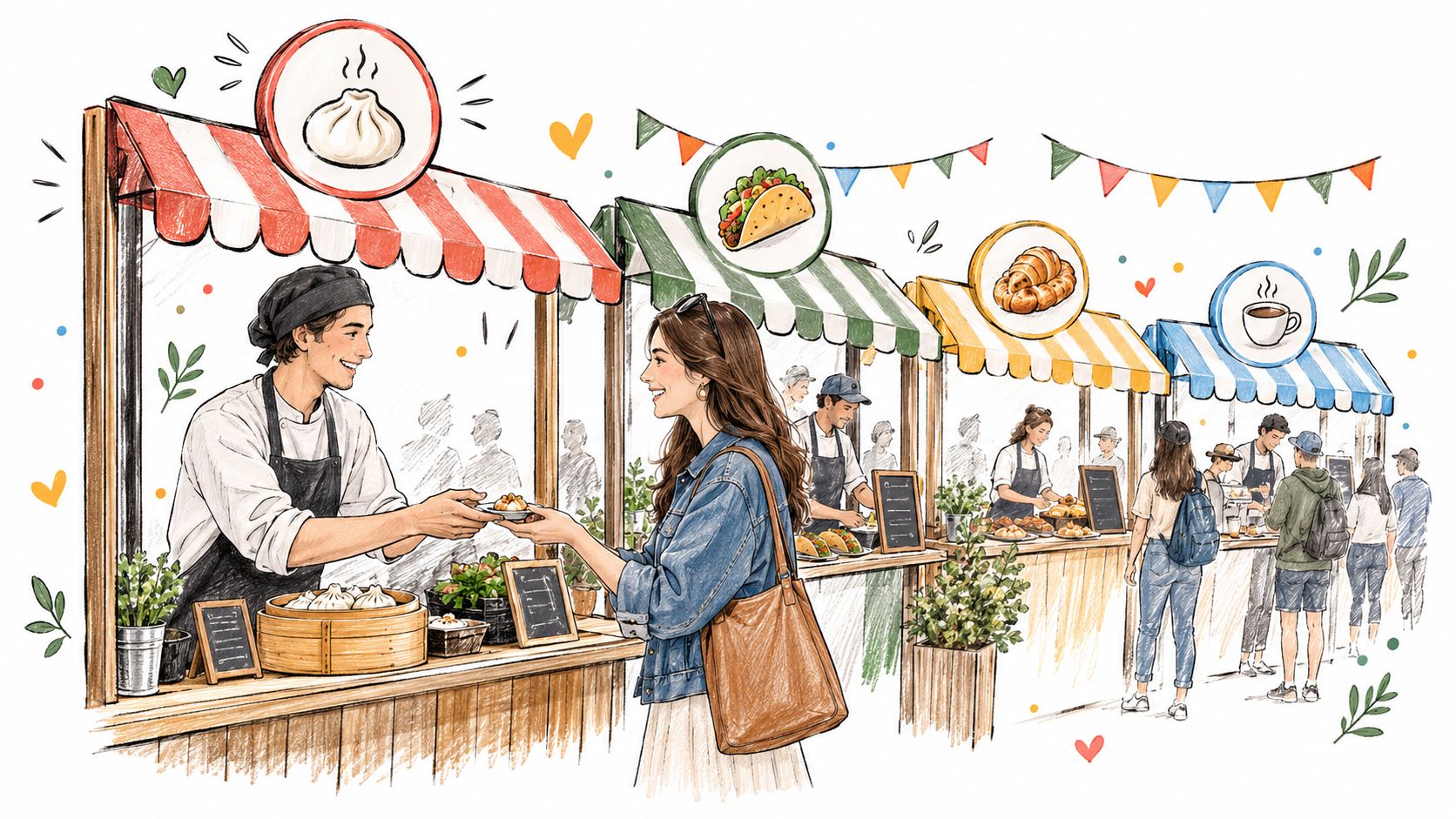
A group of six arrives at a Manchester market with three different appetites, limited time and no agreement on lunch. A street-food venue solves that problem by letting everyone choose independently, then regroup with dishes worth sharing. It creates energy without the coordination required for a formal meal.
Use markets for mixed tastes, flexible budgets and groups that enjoy browsing. Manchester has makers' markets, rotating street-food events, covered traders and specialist gatherings. Seasonal festivals suit a longer weekend outing, while permanent indoor venues are the safer choice in poor weather. Vegan markets, Asian food events, and craft beer paired with street food provide a theme without forcing one menu on everyone.
Start with this guide to street food in Manchester, then verify the chosen market or festival's opening information before travelling.
Set a meeting point before anyone joins a queue. Give the group a return time, and add one shared challenge, such as finding a dish everyone else should try. That small amount of structure keeps the outing social while preserving personal choice.
- Arrive early: Queues and seating are usually easier to manage near opening.
- Set a spending boundary: Flexible choice can encourage unplanned purchases.
- Bring payment alternatives: Carry both card and cash where suitable.
- Check the time: Agree how long to browse before deciding whether to continue elsewhere.
- Ask the vendors: Questions about ingredients, preparation and the stall's story make the visit more engaging.
- Plan for access: Check seating, toilets and indoor cover if anyone needs extra comfort.
Choose a market for a low-pressure outing where conversation and discovery matter more than guaranteed seating. Pick a restaurant instead when the group needs a fixed menu, a quiet setting or tightly controlled timing.
7. Brewery, Winery and Distillery Tours with Group Tastings
Choose a drinks tour when your group wants conversation with a clear activity built in. A brewery can show how local beer is made, while a distillery may explain botanicals, production and tasting notes. Coffee roasteries follow a similar educational format without alcohol, giving non-drinkers a genuine alternative rather than a token option.
Manchester's craft breweries often combine production tours, tasting flights and the story of the brewery. Independent distilleries may focus on gin or whisky, while cider producers can connect samples with orchard stories. This guided format gives the group something specific to discuss, so the outing feels more purposeful than just meeting in a pub.
For a focused look at the city's brewing culture, this craft beer tour guide adds a food-and-drink perspective alongside conventional brewery visits.
Plan around the group's comfort before booking. Reserve a popular weekend slot two to three weeks ahead, then ask about non-alcoholic participation, food pairings, accessible areas and water. Anyone tasting should eat beforehand, since several samples on an empty stomach can quickly make the experience unpleasant.
Use this simple plan on the day:
- Choose a question asker: One person can keep the guide's explanations connected to the group's interests.
- Record favourites: Notes help guests remember flavours and compare choices later.
- Build in pauses: Water between tastings keeps the pace comfortable.
- Check the shop: Bottles, coffee or merchandise can extend the visit without adding another venue.
- Ask about incentives: Confirm whether the operator offers a group code or a reason to return.
A coffee or soft-drinks tour suits groups with non-drinkers, designated drivers or anyone avoiding an alcohol-centred outing. You retain the learning, guided discovery and shared conversation while giving every guest an equal role. Choose a tasting-led visit for discovery, or a pub meet-up when relaxed conversation matters more than the production story.
8. Supper Clubs and Underground Dining Events
Supper clubs turn dinner into a one-off occasion. A Northern Quarter gallery, warehouse, rooftop or private home can replace the conventional restaurant, while a chef-led menu gives the evening a clear sense of discovery. Guests focus on the story and flavours rather than comparing a long menu.
Choose this format for adventurous friends, food-focused dates and small celebrations that want conversation with extra character. Shared seating can bring energy and new conversation, though it reduces privacy. Groups wanting a private table, predictable service and full control should book a restaurant takeover instead.
Manchester's independent food scene suits themed supper clubs particularly well. Search for events centred on a region, season or ingredient, then match the theme to the occasion. A collaborative chef dinner brings several culinary viewpoints, while a harvest menu gives an autumn gathering an obvious identity.
Book around the event, not the other way round
Supper clubs reward organised groups. Follow organisers on social platforms and food websites, since dates may appear there before wider listings. Book as soon as the menu and date work, because seating plans, limited places and dietary cut-offs can close quickly.
Before paying, confirm:
- Setting and access: Check seating, toilets, noise and accessibility.
- Menu requirements: Share the menu with guests and raise dietary needs early.
- Social expectations: Tell the group that other diners may share the table.
- Host interaction: Encourage questions about ingredient sourcing and the menu's design.
- House rules: Confirm policies on outside food, photography and noise.
Allow extra time around the meal for arrival, introductions and conversation with the host. That small buffer helps the evening feel unhurried, especially when the menu follows a fixed pace.
This is a strong choice for groups that value novelty and chef-led discovery over flexibility. It suits a planned celebration or food-focused night, but it is poorly matched to last-minute organisers who need an easy booking and complete control.
9. Immersive Dining Experiences with Interactive Elements
Interactive dining works best when the activity shapes the evening without taking over the meal. Mystery dinner theatre, escape-room dining, interactive chef's tables and competitive cooking challenges give groups a shared story to follow, with food, performance or puzzles driving the pace.
WhatsApp-based puzzle routes can guide groups between themed restaurant stops, combining clue-solving with independent food breaks. The format suits friends, families with older children and company teams that want an activity without a formal facilitator. Choose it for a group that enjoys making decisions together. A fixed-performance dinner fits guests who prefer to watch, while a cooking challenge suits people happy to take part.
Choose the right level of interaction
Check the activity level, walking, meal pacing and team structure before booking. Some experiences build in competition and time limits. Others leave room for conversation and a slower meal.
- Explain the mechanics: Tell guests that participation is expected, especially if clues or roles drive the experience.
- Give everyone a role: A navigator, photographer and clue-reader can keep quieter guests involved.
- Dress for the format: Select clothing that allows movement when the route includes walking or physical tasks.
- Allow extra time: Interactive courses and clue-solving can make the meal longer than standard restaurant service.
- Set the tone early: Encourage full participation, while checking that competitive elements suit the group.
Pick this style when your group wants a memorable story rather than another dinner photo. It is a poor fit for guests who dislike surprises, competition or fixed game mechanics. For a relaxed outing, choose passive dining. For guided discovery, book a hosted experience. For a more active city adventure, use a puzzle-led route with independent food stops.
10. Food-Focused Walks and Guided Neighbourhood Tours
Choose a guided food walk when your group wants local stories alongside lunch, tastings or a drink. A good guide links restaurants, markets and streets with migration, trade, industry and community, turning separate stops into one coherent experience.
Manchester gives you several strong route choices. Chinatown suits groups interested in immigration and cuisine. The Northern Quarter connects independent restaurants with the area's transformation, while Ancoats adds industrial heritage. Deansgate works well for groups seeking varied independent venues without committing to a long, formal meal. These routes provide context that restaurant-hopping rarely delivers.
For a useful local overview, read this guide to food tours in Manchester. Use it to compare a hosted walk, a self-guided itinerary and a more interactive food adventure before you book.
Plan for comfort and access
Ask for the route length, pavement conditions, stairs and venue access. Share dietary restrictions early, giving the guide time to adjust stops and make sure every guest has something suitable to eat.
- Dress in layers: Manchester weather can shift during a walking route.
- Carry water: Small practical details keep everyone comfortable.
- Arrive promptly: Late arrivals can disrupt the guide, the group and other guests.
- Save favourites: Photograph venues and note places worth revisiting.
- Extend the day: Add a market, museum or picnic if the group wants more time together.
A guided walk suits tourists, curious locals and groups that want culture with minimal planning. It also works for mixed ages and budgets because the walking creates variety without requiring a full restaurant booking. Select an interactive route when shared problem-solving and friendly competition matter more than conversation and local history.
10-Point Comparison of Group Food Outing Ideas
| Item | 🔄 Implementation complexity | ⚡ Resource requirements | ⭐ Expected outcomes | 💡 Ideal use cases | 📊 Key advantages |
|---|---|---|---|---|---|
| Food-Led Urban Exploration Adventures | Medium, route + puzzle design, tech integration | Low–Medium, mobile platform, venue partnerships, walking route logistics | High, strong group bonding, discovery, engagement | Friends, couples, team-building, tourists | Multi-stop discovery, low decision fatigue, mobile-first frictionless play |
| Collaborative Cooking Classes & Supper Clubs | Medium, chef coordination, safety & kitchen workflow | Medium–High, professional chef, commercial kitchen, ingredients, equipment | High, hands-on skills, teamwork, memorable outcomes | Corporate teams, friend groups, couples, families | Transferable culinary skills, high engagement, adaptable to diets |
| Themed Food Crawls & Neighbourhood Tastings | Low–Medium, route curation and venue timing | Low, tastings, guide/app, coordination with venues | Medium, variety-driven discovery and social energy | Tourists, locals, friends, mixed-diet groups | Broad sampling, lower commitment than full meals, photography-friendly |
| Picnic & Outdoor Dining Experiences | Low, logistics and site prep | Low, sourced food, setup/cleanup, optional permits | Medium, relaxed bonding, cost-effective memorable moments | Families, budget groups, couples, casual celebrations | Highly customisable, lower cost, relaxed pacing in nature |
| Restaurant Takeovers & Private Dining | Medium–High, negotiation, menu planning, space control | High, minimum spend/deposit, bespoke menu, dedicated staff | High, exclusive, polished experience with controlled pacing | Milestones, corporate events, large family gatherings | Full control over menu/atmosphere, streamlined service, transparent pricing |
| Market & Street Food Festival Experiences | Low, attend or coordinate vendor mix | Low–Variable, individual spend, crowd navigation, casual logistics | Medium, wide discovery, flexible engagement | Budget-conscious groups, tourists, large informal groups | Exceptional diversity, flexible pacing, suits many budgets |
| Brewery/Winery/Distillery Tours with Tastings | Medium, tour routing, safety and tasting structure | Medium, producer capacity, booking, possible transport | High, educational insight plus curated tastings | Enthusiasts, corporate groups, tourists | Behind-the-scenes access, story-rich learning, curated flavour education |
| Supper Clubs & Underground Dining Events | High, venue sourcing, curation, regulatory care | High, bespoke menu, unique venue setup, limited seats | Very high, intimate, memorable, community-focused | Foodies, special celebrations, adventurous groups | Exclusive creativity, strong community feel, chef-driven novelty |
| Immersive Dining Experiences with Interactive Elements | High, production, narrative & activity integration | High, performers, tech, set design, coordinated timing | Very high, multi-sensory engagement, strong recall | Teams seeking engagement, milestone events, experience-seekers | Highly memorable, interactive bonding, entertainment + dining blended |
| Food-Focused Walks & Guided Neighbourhood Tours | Low–Medium, guide research and route planning | Low, guide fee, tastings, manageable logistics | High, contextual learning, enhanced appreciation of places | Tourists, locals seeking history, student groups | Story-led discovery, educational value, affordable and repeatable |
Make Your Next Group Outing Count
The right group outing depends less on finding the most exciting activity and more on matching the format to the people attending. A market or picnic gives you flexibility when budgets and appetites vary. A cooking class or private dining booking works better for a structured birthday, reunion or corporate celebration. A guided food walk suits visitors who want Manchester context, while an interactive route is the better choice for groups that want a playful challenge alongside their meal.
Start with the group's energy. If guests want to sit, talk and take their time, choose private dining, a supper club or a carefully planned picnic. If they need a reason to mingle, choose a class, crawl or food-led adventure. For a mixed-age workplace group, avoid making alcohol the central activity. UK workplace research reported by Employer News found that 67% of respondents described team-building activities as enjoyable, 65% said they help teams perform better, 65% said they improve inter-generational workplace relationships and 63% said they help people feel closer to colleagues. The same research found 64% linked team building with better understanding of colleagues' strengths, while 62% said it helps people learn about teammates' interests outside work. Those findings support active formats that combine problem-solving with low-pressure social time rather than relying on dinner alone.
Your communication channel matters too. Ofcom reported that 90% of UK online adults used WhatsApp in May 2025, 74% accessed it daily, and 76% used it for personal purposes in the previous three months. The regulator also reported that 64% of WhatsApp users used the service for group messaging, making the platform a natural fit for coordinating a mobile group experience. You can read the relevant context in Ofcom's online nation research.
Use this final planning checklist
Before you confirm anything, check:
- Headcount: Get a realistic number, including late additions and likely dropouts.
- Age suitability: Confirm whether the route, venue and food work for children or older guests.
- Mobility: Check walking distance, seating, toilets, steps and venue access.
- Dietary requirements: Ask about allergies, halal-friendly food, vegetarian choices and cross-contamination procedures.
- Weather backup: Have an indoor alternative for picnics, walks and outdoor markets.
- Travel time: Choose a central meeting point and allow time for public transport or parking.
- Booking deadline: Reserve private dining, classes, tours and popular events early enough to protect your preferred date.
- Payment clarity: Tell guests what's included and whether they'll need extra money for drinks, transport or optional purchases.
Food Escapes is a particularly clear option for a Manchester group that wants food, walking and puzzles in one outing. You book online at Food Escapes, receive a starting point and move through three hidden-gem food stops, solving clues through WhatsApp to find each next location. The route includes independent venues and themes such as Dumpling Trail, Rise & Dine Brunch, Los Tacos, Southeast Asia, Streets of the East, Indian Feast, Craft Beers and Comfort Cravings.
All food is included in the ticket, and the game clock pauses while your group dines, so the experience has a competitive thread without turning every bite into a countdown. Use the booking flow or WhatsApp contact option to clarify route details, dietary requirements and group questions before you commit. It's a strong fit for friends, couples, tourists, older children and company teams, particularly when some guests want a city adventure and others mainly want independent food.
Choose your date, confirm the headcount and pick the format that matches your group's energy and appetite. If everyone's ready to explore Manchester through clues, local food and hidden venues, book the Food Escapes experience that suits your route and make the outing the main event, not just the meal at the end.
Food Escapes combines Manchester city exploration, puzzle-solving and food at three independent stops, with clues delivered through WhatsApp and all food included in the ticket. Visit Food Escapes to choose a themed route for your friends, family or team and plan a group outing with a genuine sense of discovery.

0 comments