


A food tour is a guided or self-guided experience where you walk through a city or neighbourhood, tasting a variety of local dishes from different independent restaurants, markets, and street food stalls. A typical Manchester route may include 7 to 8 stops, turning lunch or dinner into an interactive city adventure rather than a single restaurant booking.
You may be searching for something more memorable than another meal out. Perhaps you're planning a first date, entertaining visitors, organising a birthday, or looking for a Manchester activity that doesn't revolve around drinking. A food tour gives you a route, a reason to explore and plenty to talk about, with local dishes and stories providing the thread that connects each stop.
Table of Contents
- So What Exactly Is a Food Tour?
- The Many Flavours of Food Tours
- A Taste of What to Expect on Your Outing
- Who Are Food Tours Really For?
- The Modern Twist A Puzzle-Driven Food Adventure
- How to Choose and Book Your Perfect Food Tour
So What Exactly Is a Food Tour?
A food tour combines guided exploration, local storytelling and several tastings in one organised outing. Instead of choosing one restaurant and staying there, you move through a neighbourhood with a guide, or follow a planned route independently, sampling food from different venues along the way.
The important distinction is curation. A restaurant crawl might mean picking places at random, while a pub crawl usually centres on drinks. A food tour is designed around a particular area, cuisine or theme, so each stop contributes something different. You might visit a bakery, market stall, independent restaurant and dessert shop, while learning how the neighbourhood has changed and why certain dishes belong there.
Why food tours make sense in the UK
The UK already has a strong dining-out habit. Households spent £11.25 per person per week on food and drink eaten outside the home in FYE 2024, and that category represented 24% of total food-and-drink expenditure, according to the UK government's Family Food statistics. Eating-out spending also rose 5.9% in real terms year on year, so a food tour fits an established behaviour while adding discovery and structure.
That's why a food tour can answer the familiar question, “What should we do today?” You're not only paying for food. You're paying for a planned experience that brings together several tastes, a walk through the city and the chance to find places you might otherwise miss.
For a Manchester-focused guide to the format, routes and local possibilities, explore this Manchester food tour guide.
The Many Flavours of Food Tours
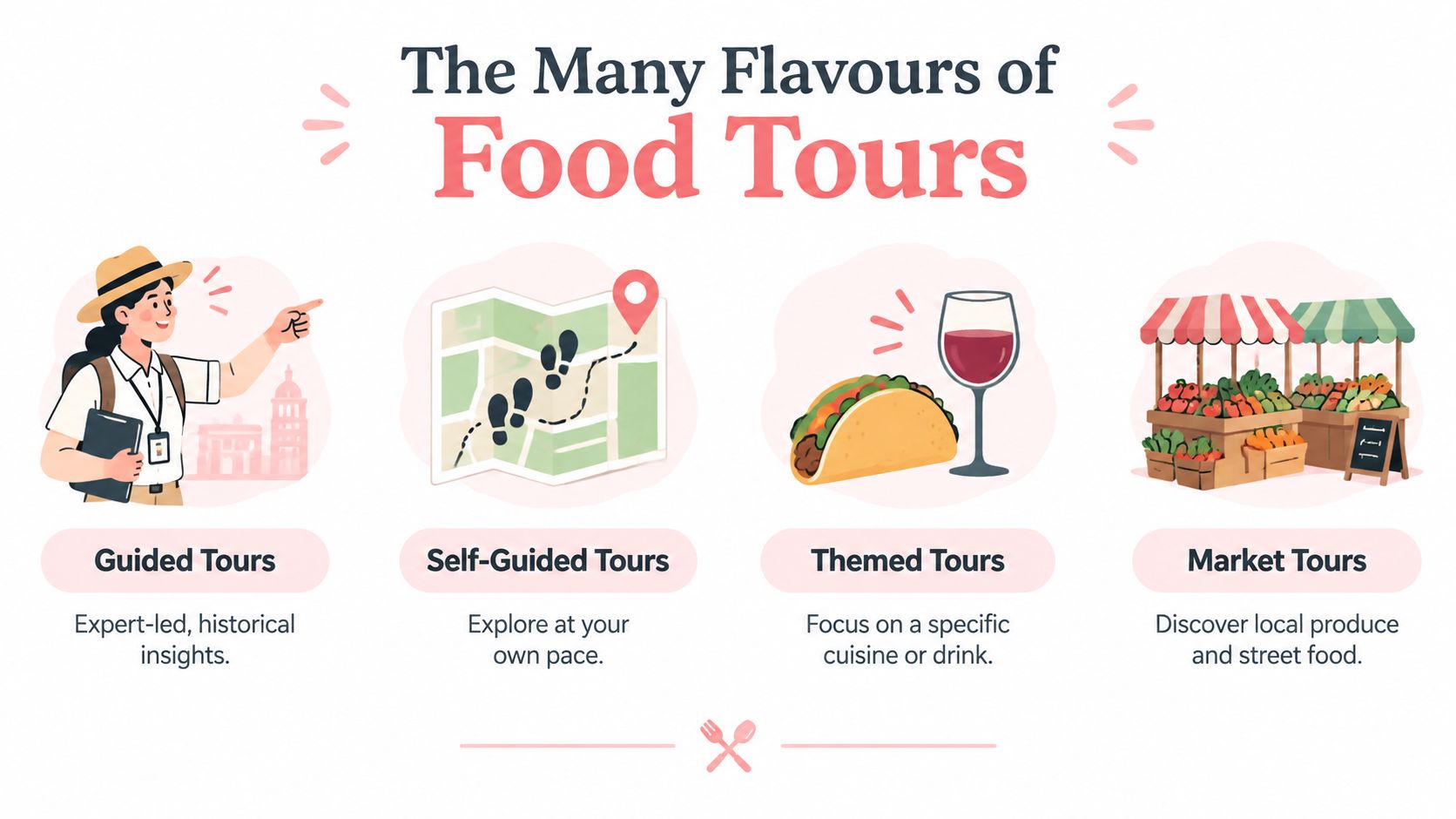
Food tours come in several formats, and the right one depends on whether you want a knowledgeable host, complete freedom, a particular cuisine or a lively market atmosphere.
Guided walking tours
This is the classic option. You meet a local guide, join a group and follow a carefully planned route through a city or neighbourhood. Think of it as a documentary you can eat your way through. The guide supplies context about ingredients, restaurants, architecture and local history, while the group moves between tastings.
Guided tours suit first-time visitors, curious locals and anyone who'd rather not handle maps, reservations or menu choices. They're also useful when you want to ask questions as you go, especially about unfamiliar dishes or regional traditions.
Self-guided food tours
A self-guided tour feels more like an open-world video game. You receive a route or set of recommendations, then decide when to stop, how long to stay and which detours to take. This format works well for independent travellers, families with their own schedule and locals who prefer a flexible afternoon.
The trade-off is that you'll need to manage timing and check what each venue includes. You may get more freedom, but you'll usually receive less live storytelling and fewer opportunities to ask a guide about the places you visit.
Themed tasting trails
A themed trail narrows the focus. It could centre on dumplings, tacos, brunch, craft beer, desserts or a particular regional cuisine. The advantage is coherence. Every stop helps you compare different interpretations of the same style of food, rather than moving between unrelated bites.
This format works particularly well for date ideas, birthday outings and groups with a shared interest. If you're planning a food-themed event, browsing food truck slogan categories can even spark ideas for the playful language used in invitations or team names.
Market tours
Market tours put produce, street food and the atmosphere of a trading space at the centre. You might taste freshly prepared dishes, learn about local ingredients and watch vendors work in a busy public setting. They're often a good choice for visitors who want to understand how a city eats day to day.
Puzzle-led options add another layer for groups who want more involvement. If solving clues sounds more appealing than following a guide, these exploration games show how city discovery can become an active challenge.
| Format | Best for | Main experience |
|---|---|---|
| Guided walking tour | Visitors and curious locals | Expert commentary and organised tastings |
| Self-guided tour | Independent explorers | Flexible timing and personal pace |
| Themed trail | Food-focused groups and dates | A consistent cuisine or food idea |
| Market tour | Street-food fans | Produce, vendors and lively local atmosphere |
A Taste of What to Expect on Your Outing
A food tour usually starts at an easy-to-find meeting point. The guide introduces the route, explains how the tastings work and sets expectations around walking, timing and group etiquette. From there, the experience unfolds as a sequence of small discoveries rather than one long sitting.
A route may take you through 3 to 5 venues, although some Manchester listings describe routes with 7 to 8 stops and 8 food tastings, alongside a local guide and drinking water. Those details vary by operator, so check the itinerary before booking rather than assuming every tour includes the same amount of food.
A typical route through Manchester
Picture starting in the Northern Quarter. Your first stop could be a bakery or café, giving everyone a gentle introduction before the group moves towards a market or street-food venue. You might then try a savoury dish at an independent restaurant, hear about the neighbourhood's character and finish with something sweet.
Manchester food tours commonly highlight areas such as the Northern Quarter and Ancoats, rather than keeping guests on a generic tourist circuit. Other routes may include Spinningfields, the Gay Village, Corn Exchange or Manchester Craft and Design Centre, depending on the theme and operator.
Practical rule: Check whether the ticket includes every tasting, or whether you'll need to budget for extra purchases along the way.
UK food tours often promote independent venues and specific neighbourhoods, helping guests discover food businesses beyond the main tourist trail. Manchester examples focus on independent eateries in places such as the Northern Quarter and Ancoats, as shown by these local food tour listings.
Timing, food and price
Many UK food tours last about 3 to 4 hours, while one Manchester tour is listed from £85 and a Chester half-day tour lasts about 4.5 hours, including food and alcoholic drinks. Treat those figures as examples, not a universal price list. The cost depends on the number of stops, the size of the group, the guide, the type of food and what the ticket covers.
You should expect to walk between venues, stand at some stops and eat smaller portions rather than receive several full restaurant meals. By the final tasting, guests often feel comfortably full, especially when the route balances rich dishes with lighter bites.
Who Are Food Tours Really For?
You don't need to call yourself a foodie to enjoy a food tour. You only need curiosity, an appetite and a willingness to try a few places in a different order than you might choose alone.
Visitors who want more than landmarks
A food tour gives tourists a practical way to experience a city through its everyday eating habits. VisitBritain reported that 20.7 million inbound visits in 2023 included visitors who tried local food, representing over half of inbound visitors to Britain. That makes culinary exploration a familiar part of travel, not a niche interest. You can read the VisitBritain research on British food and drink for the wider context.
A guide can also help you avoid spending a short trip on meals chosen solely because they're close to a landmark. You'll see the city while moving between places with a local connection.
Locals seeking a better date idea
For Manchester residents, a food tour turns dinner into an activity. You can solve conversation gaps by comparing dishes, discovering a new neighbourhood and sharing opinions about each stop. That makes it a strong alternative to cinema dates, standard restaurant bookings or drinks-focused evenings.
Birthdays, friends and work groups
Groups benefit from the built-in rhythm. You have a meeting point, several shared stops and plenty of natural moments to chat. A food tour can work for birthday plans, visiting friends and team activities, especially when the group includes people who prefer food, conversation and walking over nightlife.
Families with older children may enjoy the sense of progress, while non-drinkers can choose a route where the food remains the main attraction. The best match depends less on how adventurous the group claims to be and more on whether the itinerary suits everyone's comfort level.
The Modern Twist A Puzzle-Driven Food Adventure
Traditional food tours ask you to follow the route and listen. A puzzle-driven food adventure asks you to participate in the route, using clues to decide where the group goes next.
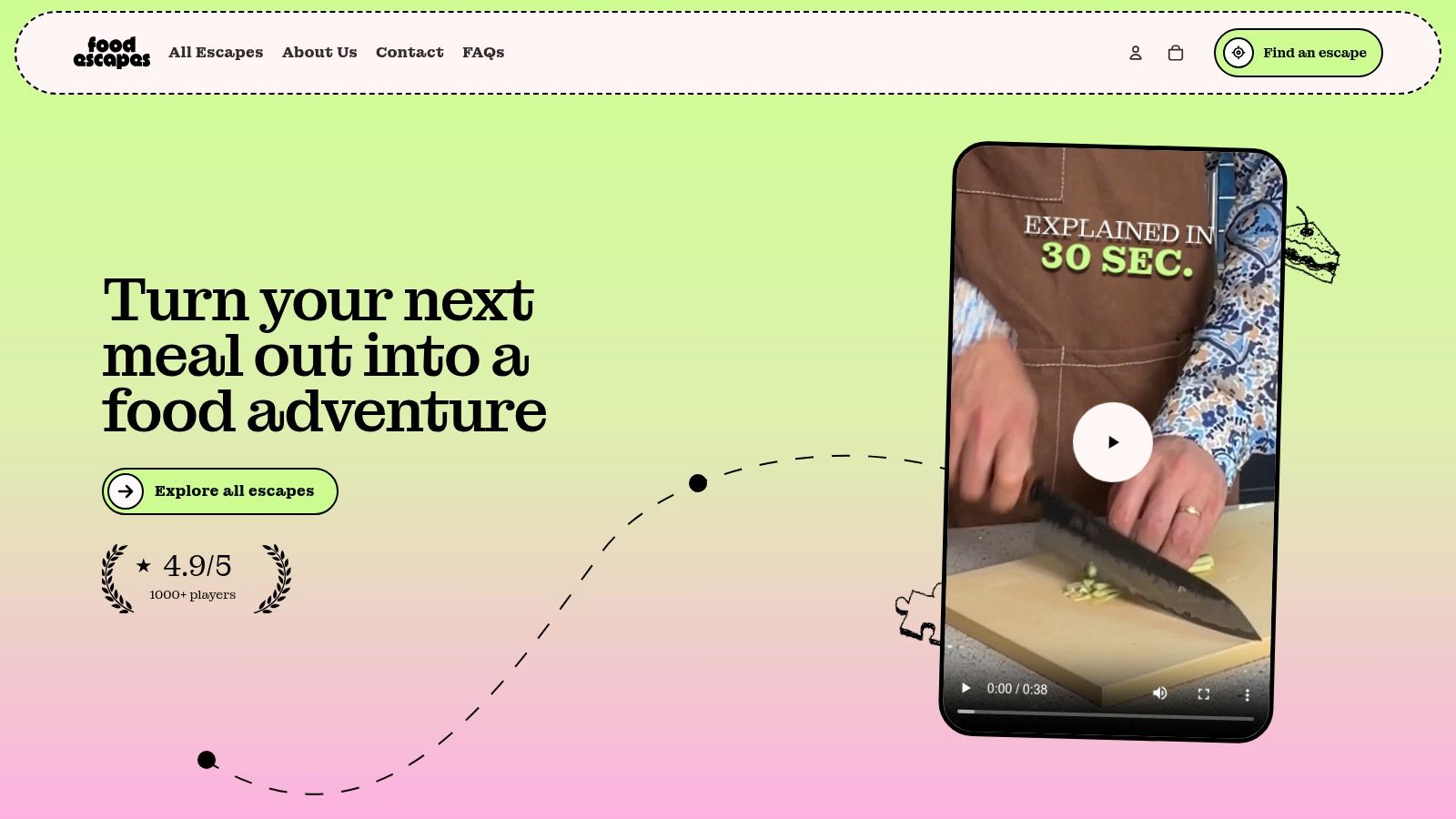
That's the idea behind Food Escapes, a Manchester experience that combines city exploration, puzzle-solving and independent food stops through WhatsApp. After booking, players receive a starting point, then solve clues woven into the streets around them to reveal the next restaurant destination.
How the game changes the usual format
The food remains central, but the route becomes a shared challenge. Your group might examine a clue, debate an answer and head through Manchester to find the next hidden venue. A game clock creates friendly competition, then pauses at each restaurant so you can relax and enjoy the dishes before continuing.
Each escape guides players to three hidden-gem food stops, with all food included in the ticket. The themed choices include Dumpling Trail, Rise & Dine Brunch, Los Tacos, Southeast Asia, Streets of the East, Indian Feast, Craft Beers and Comfort Cravings.
That format suits couples who want an unusual date, friends who enjoy a bit of rivalry and company teams looking for a low-friction activity. Families with older children can also take part if they enjoy problem-solving and trying new cuisines. Routes can include options designed to accommodate preferences such as halal-friendly dining, but you should still check the specific escape before booking.
For a closer look at the concept, visit the Food Escapes experience guide.
How to Choose and Book Your Perfect Food Tour
Start with the group, not the website. Decide whether you want a calm guided walk, a market-focused outing, a cuisine-specific trail or a competitive puzzle experience.
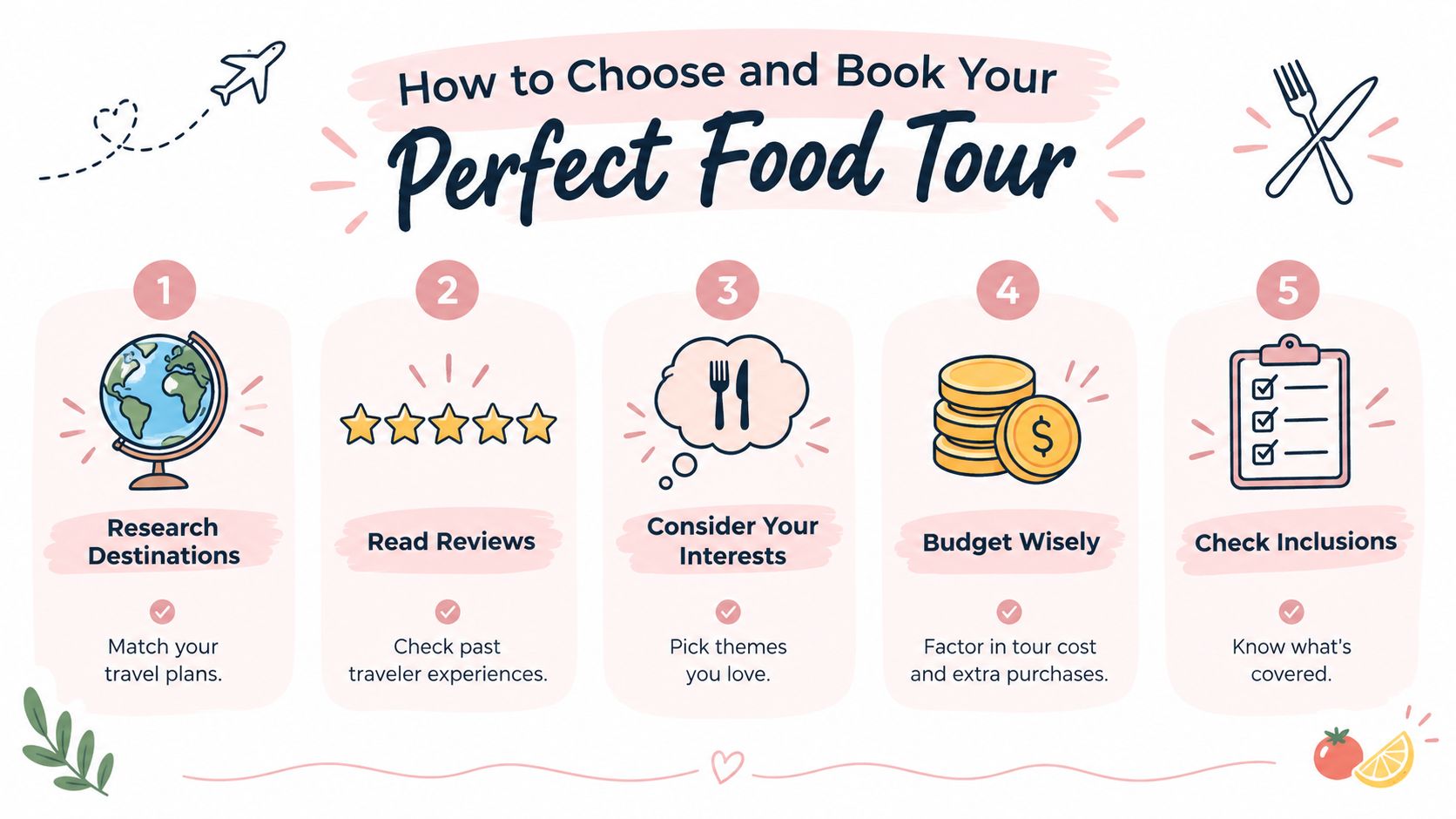
Use this checklist before paying:
- Dietary needs: Confirm whether the route can accommodate halal-friendly, vegetarian, vegan, allergy-related or other requirements. Ask how substitutions are handled.
- Accessibility: Check walking distances, steps, seating arrangements and toilet access. Contact the operator if the listing doesn't answer these questions.
- Inclusions: Find out whether tastings, drinks, water, guide support and gameplay are included. Don't assume every food or beverage is covered.
- Timing: Check the start time and expected duration, then allow space before another booking. A food tour works best when you aren't rushing away from the final stop.
- Reviews: Read recent reviews for comments about portion sizes, guide knowledge, organisation, dietary communication and the actual neighbourhood experience.
Booking platforms and tour operators also use different systems, so it can help to compare tour booking solutions if you're organising experiences for a group or business. A travel report recorded a 23% year-over-year increase in food tour bookings, which reflects growing interest in memorable culinary activities, but popularity doesn't remove the need to check the details of your chosen route.
Wear comfortable shoes, bring weather-appropriate clothing and arrive ready to walk. Above all, choose a format that matches the occasion. For a Manchester date, birthday or group day out with clues, independent food and a non-alcohol-led structure, explore the Food Escapes option before you book.
Food Escapes turns the question “what is a food tour?” into a playable Manchester adventure, combining WhatsApp clues, hidden independent venues and included tastings across themed routes. Choose your escape and invite your friends, partner, family or team to Food Escapes for a food-led city experience you'll actively discover together.

0 comments