


You're standing near Piccadilly Gardens, hungry enough to eat immediately but curious enough not to settle for the first familiar menu. One sign promises curry, another offers dumplings, a café serves Lebanese pastries, and somewhere down a side street there may be a Sri Lankan dish you've never tried. Manchester makes choice exciting, but it can also make discovery feel random.
That's where diversity in food becomes more useful than a list of cuisines. It describes the traditions, ingredients, species, people and neighbourhood stories that meet on a plate. This guide explores what food diversity really means, why it matters socially and economically, and how Manchester's hidden eateries bring the idea to life. You'll also find practical ways to plan a more varied food outing, whether you're arranging a date, a birthday, a group activity or a day out in the city.
Table of Contents
- Introduction to Diversity in Food
- Defining Diversity in Food
- Cultural Social and Economic Importance
- Manchester's Diverse Culinary Landscape
- Practical Tips for Experiencing Diverse Food
- How Food Escapes Celebrates Culinary Diversity
- Conclusion and Next Steps
Introduction to Diversity in Food
Food diversity starts with a simple question: how much variety is present in what we eat? The answer can involve the country or region behind a recipe, the ingredients used to make it, or the different biological species represented in a meal.
A visit through Manchester can reveal all three. You might move from a Malaysian noodle dish to a Lebanese mezze, then encounter herbs, grains, vegetables, fish or spices that rarely appear in your usual weekly routine. The experience isn't only about collecting unfamiliar flavours. It's about understanding how migration, family traditions, trade, farming and local entrepreneurship shape the food around you.
The idea also has a scientific dimension. Researchers can measure dietary species richness, meaning the number of distinct species people eat over a set period. That gives food diversity a more precise meaning than saying a city has “lots of restaurants”.
For food lovers, this matters because exploration becomes more intentional. Instead of choosing another version of a familiar meal, you can look for a different culinary tradition, ingredient group or independent venue. Manchester's streets offer plenty of opportunities to do that, especially when you slow down, ask questions and let curiosity guide the next stop.
Defining Diversity in Food
Think of a diverse plate as a patchwork quilt. Each square has its own colour, texture and origin, but the finished piece gains meaning from the way the parts sit together. A meal works similarly. A cooking tradition, an unfamiliar ingredient and a distinct species can each add a different form of variety.
Three ways to understand food diversity
Variety of cuisines refers to the traditions and techniques behind a dish. Malaysian, Lebanese, Sri Lankan, Indian and many other food cultures bring their own combinations of seasoning, preparation, serving style and history. Cuisine isn't just a label on a menu. It reflects how people cook, celebrate and share food.
Range of ingredients looks at what the cook uses. A menu can become more varied through different grains, pulses, vegetables, fruits, herbs, spices, seafood, meat, dairy products or fungi. Ordering several dishes from the same category may feel adventurous, but it doesn't necessarily create a broadly diverse meal.
Biological species richness goes deeper. It counts distinct species represented in a person's diet, offering a way to examine variety beyond restaurant categories. A plate with several ingredients from one narrow group may look colourful while contributing less biological variety than a meal built from a wider mix.
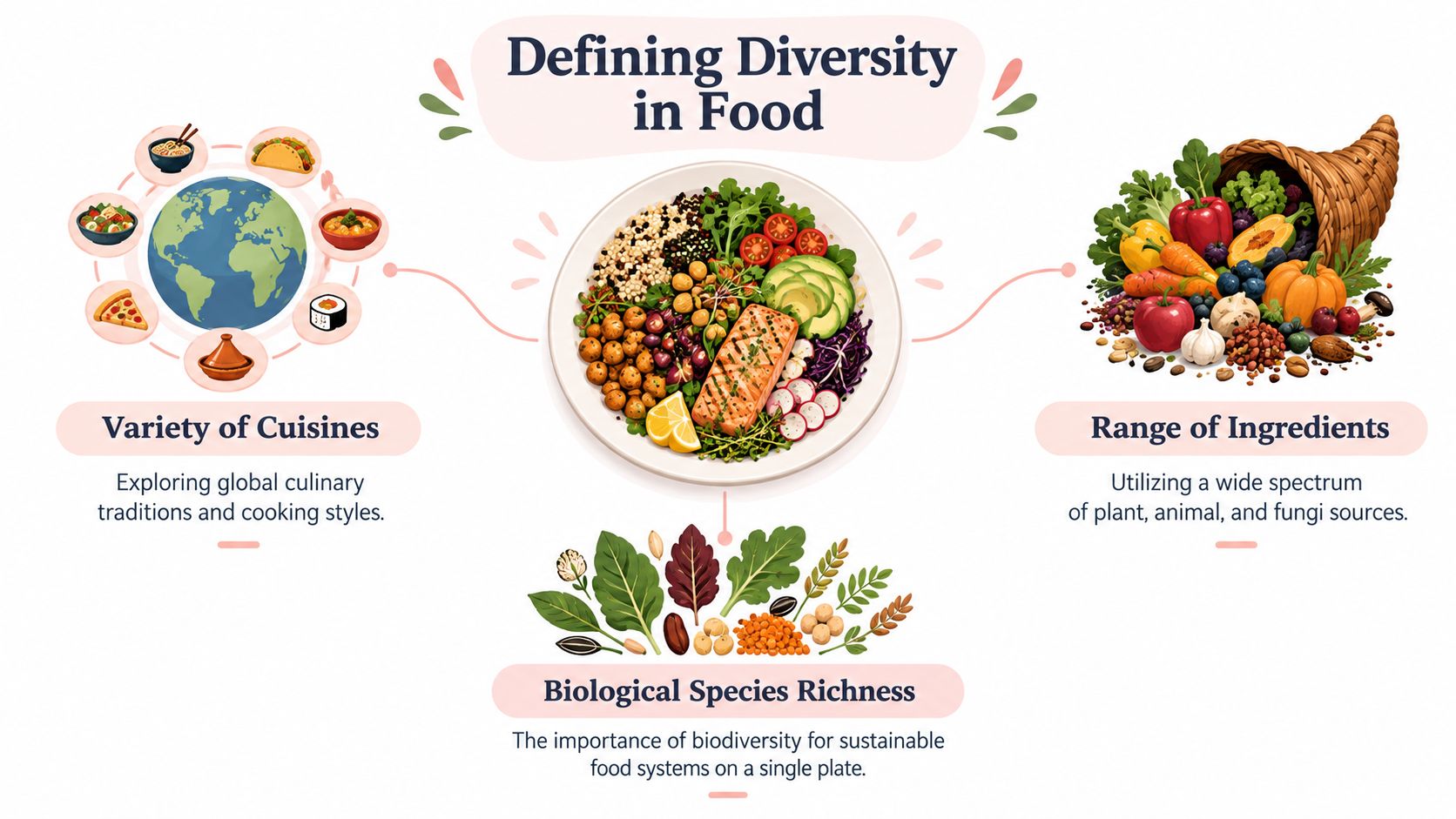
A 2025 University of Aberdeen study found that the average Brit eats at least 49 different species each week, based on research that tracked diets over four days. The finding suggests that biodiversity already exists in everyday UK eating habits, even if people don't usually think about their meals in those terms. You can explore the relationship between blended traditions in this guide to fusion food, while remembering that fusion and food diversity aren't identical concepts.
Cultural Social and Economic Importance
A varied food scene does more than give diners additional choice. It preserves memories, creates meeting points and supports the people who turn family knowledge into a living business.
Food carries cultural memory
Recipes often travel with people. A spice blend, pastry, stew or cooking method can connect a restaurant kitchen in Manchester with a family history elsewhere. Independent cafés and restaurants give those traditions a public place, allowing customers to encounter food in the setting where its meaning remains visible.
That exchange can also improve understanding. Diners don't need to become experts before trying something unfamiliar. They can ask what a dish contains, learn how it's normally served and appreciate why a particular ingredient matters. Curiosity replaces the distance created by unfamiliar names.
Shared meals build social connection
Food gives people a reason to sit together without requiring everyone to share the same background. A group can compare textures, discuss spice levels and discover that a dish someone initially hesitated to order becomes the favourite of the evening.
Manchester's multicultural festivals, markets and neighbourhood dining streets show how food can create informal community spaces. These settings bring together residents, visitors, families and workers who might not otherwise meet. Shared eating doesn't erase cultural differences, but it gives people a comfortable way to engage with them.
Practical rule: Ask about a dish before judging it by its name. One useful question can turn uncertainty into a conversation.
Diverse food supports local enterprise
The commercial picture reinforces the cultural one. The UK's ethnic food market grew from USD 1.90 billion in 2018 to USD 3.12 billion in 2024, signalling sustained demand for varied cuisines, as detailed in this UK ethnic food market overview.
That growth creates room for chefs, family businesses, specialist producers, market traders and delivery operators. It also encourages menu experimentation. A restaurant can serve a community's traditional favourites while introducing those dishes to diners who are actively looking for something new.
Economic value, however, depends on thoughtful support. Customers can help independent venues by visiting beyond the busiest streets, booking when needed, leaving useful reviews and returning when they've found somewhere worth recommending. Food diversity stays healthy when restaurants aren't treated as one-off novelties, but as part of the city's everyday life.
Manchester's Diverse Culinary Landscape
Manchester's food culture is broad enough to support both planned food trails and spontaneous detours. An Office for National Statistics dataset records 1,535 food-service local units in the city, including 520 licensed restaurants, 400 unlicensed restaurants and cafés, and 615 takeaway food shops and mobile food stands. The figures provide a concrete sense of scale behind Manchester's reputation as a food city, as shown in the ONS food-service dataset.
| Type | Count |
|---|---|
| Licensed restaurants | 520 |
| Unlicensed restaurants and cafés | 400 |
| Takeaway food shops and mobile food stands | 615 |
| Total food-service local units | 1,535 |
Numbers alone can't describe the aroma drifting from a restaurant doorway or the excitement of spotting a dish you've never seen before. For that, explore the city by neighbourhood.
Rusholme and the Curry Mile
Rusholme's Curry Mile remains an obvious starting point for South Asian food. Its restaurants, sweet shops and cafés create a lively route where you can compare regional styles rather than treating “Indian food” as a single category. Look for differences in breads, grills, rice dishes, vegetarian cooking and spice combinations.
The Northern Quarter and central discoveries
The Northern Quarter suits a shorter, more social food outing. Street-food stalls, independent kitchens and compact restaurants sit close to bars, galleries and music venues, making it easy to combine lunch with city sightseeing. Nearby, Manchester's Chinatown offers another route into East and Southeast Asian flavours.
Levenshulme and independent character
Levenshulme rewards slower exploration. Its independent cafés and restaurants reflect the area's changing communities, with menus that can move from familiar comfort food to Lebanese, Malaysian or Sri Lankan dishes. These venues may be modest in size, but that's often part of their appeal. You're more likely to notice personal service, family recipes and menus shaped by the people running the kitchen.
The best Manchester food experiences connect these details. A hidden venue isn't valuable only because it's hard to find. It matters because it adds a story, a technique or an ingredient to your understanding of the city.
Practical Tips for Experiencing Diverse Food
A successful food outing needs more than an appetite. A little preparation helps you discover genuinely different places without creating problems around diet, access or timing.
Build a neighbourhood circuit
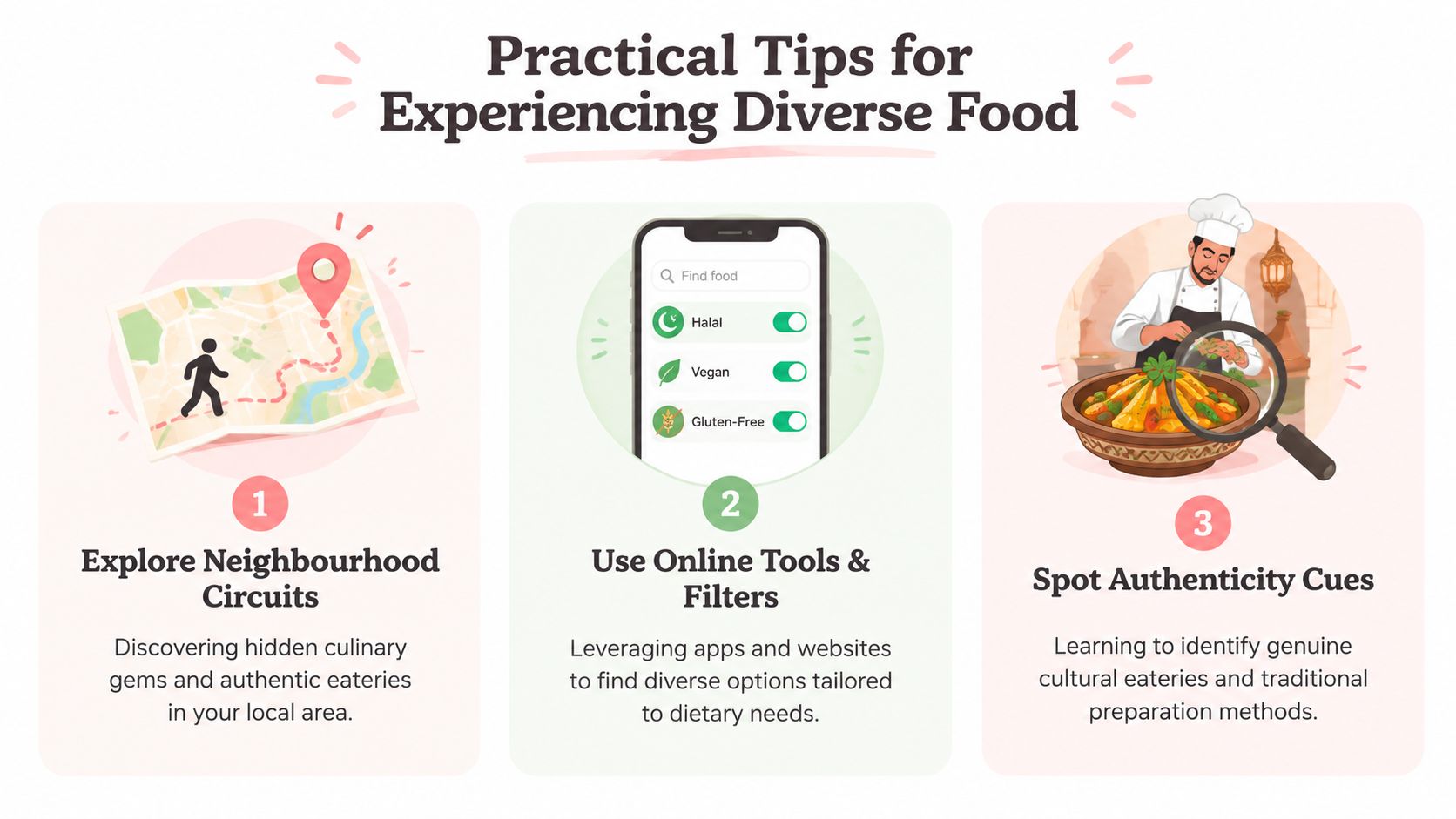
Choose one area rather than trying to cover the whole city in a single afternoon. Rusholme works well for South Asian exploration, the Northern Quarter suits central food and culture, while Levenshulme offers a strong independent focus.
Before setting out, select a broad theme such as dumplings, grilled dishes, plant-based food, Southeast Asian flavours or regional sweets. A theme gives your walk direction without forcing every venue to serve the same kind of dish.
Check menus and dietary needs early
Use restaurant websites, booking platforms and map listings to check whether venues can accommodate your needs. Search specifically for halal, vegan and gluten-free options, then contact the restaurant if ingredients or preparation methods aren't clear.
Tell the venue about allergies rather than assuming a menu label answers every question. Ask whether shared equipment, sauces or garnishes could affect your meal. If someone in your group uses a wheelchair, has limited mobility or needs a quieter setting, check entrances, toilets, seating and noise levels before booking.
Recognise more meaningful variety
A study of independent takeaways in Manchester found that 57.4% offered broadly similar foods such as fried chicken, burgers, pizzas and kebabs, while the remaining outlets offered more diverse menus, according to the published Manchester takeaway research. That doesn't make familiar food a bad choice. It means you may need to search deliberately if your aim is discovery.
Look for signs of a focused culinary identity:
- Ask about specialities: Staff can often point you towards dishes that represent the restaurant's tradition.
- Notice preparation: Handmade breads, fresh spice pastes, charcoal cooking or regional sauces can tell you more than a broad cuisine label.
- Support small venues: Book ahead where possible, arrive on time and avoid cancelling a table at short notice.
- Share thoughtfully: Ordering several dishes for the table can help everyone try more, provided the restaurant's serving style suits sharing.
- Respect local etiquette: Watch how dishes are served, ask before changing ingredients and treat unfamiliar customs with interest rather than judgement.
The most rewarding food discovery often starts with a question, not a photograph.
How Food Escapes Celebrates Culinary Diversity
A food trail becomes more engaging when you're not only following a map from one restaurant to the next. Food Escapes combines puzzle-solving, city exploration and independent dining into a WhatsApp-based adventure, giving each stop a purpose beyond the meal itself.
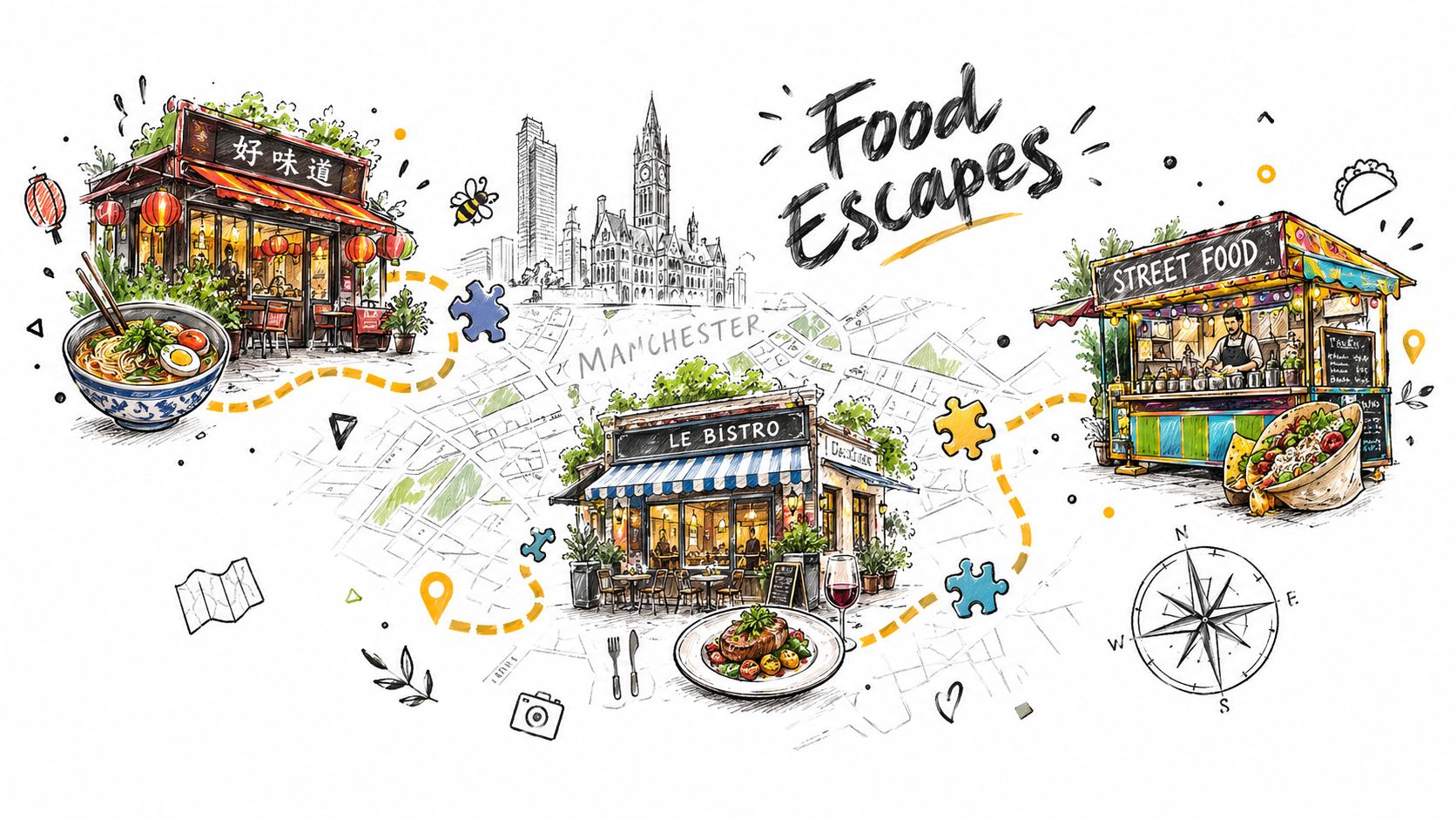
Each themed escape leads players to three hidden-gem food stops, with food included in the ticket. Routes such as Dumpling Trail, Southeast Asia and Indian Feast create a clear framework for trying different dishes, while the clues encourage you to notice streets, landmarks and details you might otherwise walk past.
The format works for couples planning a more memorable date, friends looking for a city activity, families with older children and company teams that want an easy group challenge. The game clock adds friendly competition, but pauses at each restaurant so you can sit down and enjoy the food rather than rushing through it.
Watch the experience in action before choosing your route:
The approach also fits the direction of UK food policy. The UK government food strategy for England prioritises valued UK, regional and local food cultures, alongside helping people build the confidence and knowledge to cook and eat well. A guided trail turns those principles into an outing. You meet local businesses, encounter food stories and take part in the city rather than consuming it from a distance.
If you're interested in how food-led events are organised more broadly, this resource on navigating London taste festivals and staffing offers useful context for the work behind large culinary gatherings. For the Manchester experience itself, discover how Food Escapes works before booking.
Conclusion and Next Steps
Diversity in food has several layers. It can mean a Malaysian dish beside a Lebanese one, a wider spread of ingredients, or the number of biological species represented in a person's diet. In Manchester, those ideas become tangible through neighbourhood restaurants, independent cafés, takeaways and food trails that connect eating with culture, community and place.
Choose an area, check your dietary and access requirements, ask thoughtful questions and look beyond the most familiar menu. Then put the idea into practice with a themed Food Escapes trail, where clues lead you to independent venues and new flavours across Manchester.
Food Escapes offers WhatsApp-based city adventures that combine puzzles, three independent food stops and dishes included in your ticket. Choose a themed route for your next date, birthday, group day out or Manchester discovery and book through Food Escapes today.

0 comments