


Fusion food is cooking that blends ingredients, techniques, or finished dishes from two or more culinary traditions. In the UK, 68% of respondents in a survey of 2,003 people found British fusion appealing, which helps explain why it keeps turning up everywhere from brunch plates to pub menus (specialityfoodmagazine.com).
Table of Contents
- A Quick Bite-Size Definition
- How Fusion Food Became Part of British Eating
- Common Approaches and Tasty Examples
- Where Fusion Is Heading Right Now in the UK
- Authentic Fusion Versus Gimmicky Mashups
- How to Enjoy Fusion Food in Manchester
- Wrapping Up With a Fork and an Open Mind
A Quick Bite-Size Definition
You sit down for brunch in Manchester, and your plate arrives with kimchi on the side or a miso butter hash brown beside the eggs. Fusion food shows up on menus as intentional mixing, a kitchen deliberately combining a familiar format with flavours, ingredients, or methods from another culinary tradition.
The clearest answer to what is fusion food is intentional mixing. A dish has a starting point, then adds a new influence with a purpose. It might keep the structure of a British brunch while changing the seasoning, sauce, or garnish. That deliberate connection gives the dish its identity.
A tikka masala pie is easy to understand because the pastry pie format remains familiar while the filling carries a different culinary influence. The same applies to miso butter on roast potatoes, or a fry-up finished with spices and sauces from elsewhere. The shape stays recognisable. The flavour has travelled.
Practical rule: identify the British or local dish underneath, then name the added flavour or method. If both parts make sense together, you are probably looking at fusion rather than a gimmick.
A helpful way to understand the idea is through layers. Start with the base dish, add the new influence, and ask what links them. Like adding a new instrument to a familiar song, the extra element should contribute something rather than make noise. When the layers support one another, the result feels like a fresh version of a meal you already know.
Manchester makes a useful classroom for this because independent venues, mixed communities, and neighbourhood dining shape the city's food scene. Adventure-style food experiences often begin with a familiar local format, then invite diners to try a different flavour direction. The strongest examples feel connected to the people and place around them, rather than built only for chef theatrics.
How Fusion Food Became Part of British Eating
British diners have long accepted dishes that keep a familiar structure while changing the flavours inside it. Anglo-Indian cooking, Italian ice cream sold by immigrant vendors, German butchers, and later favourites such as chicken tikka masala and spaghetti bolognese all became part of ordinary British eating over at least the last 150 years (University of Chicago Press).
Fusion is closer to a repeating British habit, one that takes something from elsewhere and makes it feel at home. What began through migration, trade, and local adaptation now appears in home kitchens, pubs, takeaways, and independent restaurants. That history helps explain why fusion feels familiar in Manchester, even when a dish introduces an unfamiliar flavour.
From imported idea to everyday plate
A useful way to follow the story is to watch how dishes settle into daily routines. A meal may arrive through a community, change as local cooks work with available ingredients, then become something diners recognise as part of the wider British menu. The original influence remains, but the dish also gathers new associations.
Manchester gives this process a distinctly local setting. Migration-linked food cultures have shaped neighbourhoods across the city, while independent venues keep experimenting with formats that invite a little more curiosity. An adventure-style food experience might begin with a pub-friendly meal or a takeaway favourite, then take it towards a new spice blend, sauce, or cooking method.
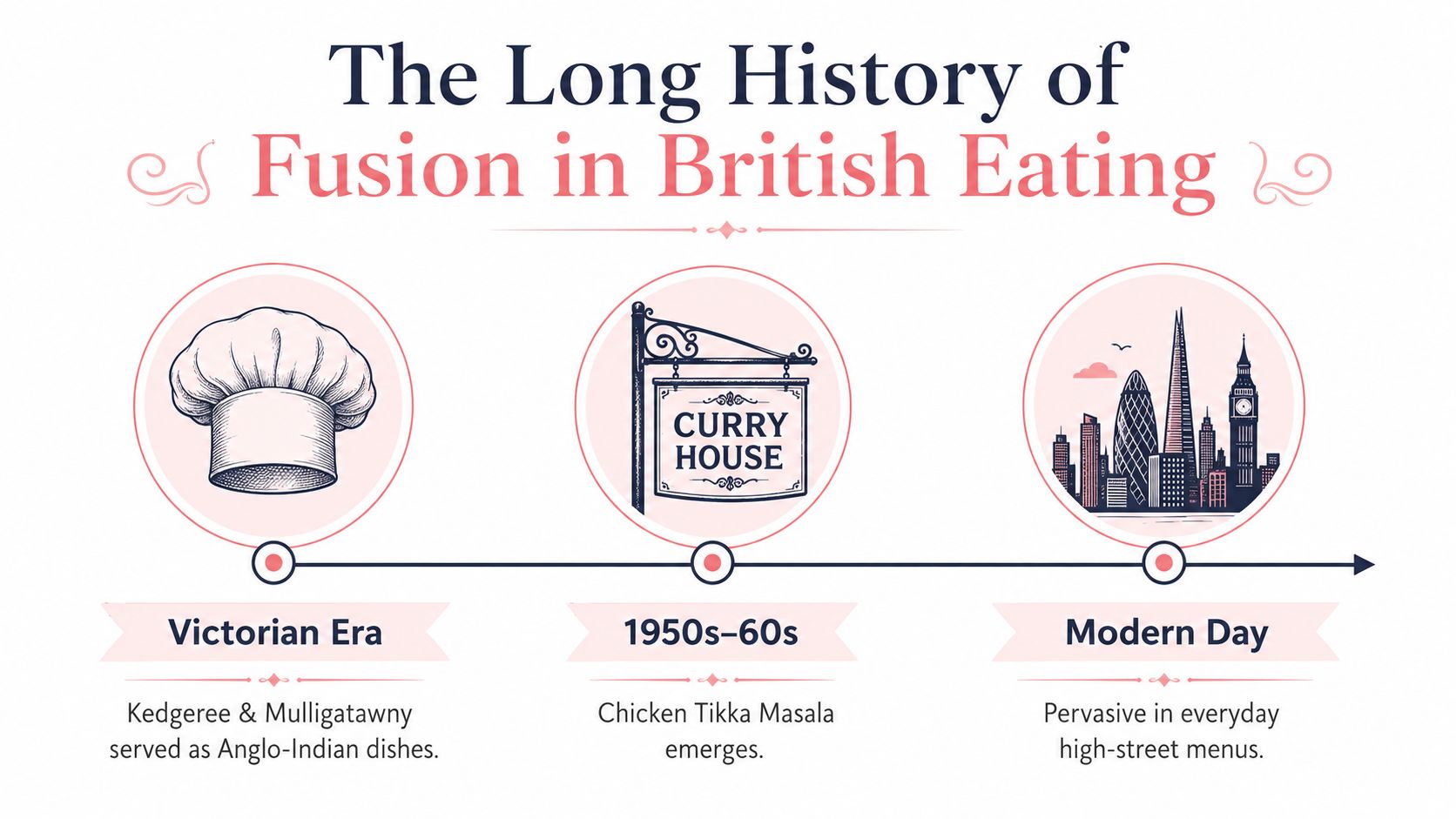
The strongest modern examples feel connected to that shared eating history. A dish that could sit comfortably beside a curry house takeaway, a pub roast, or a Sunday lunch has a clearer cultural footing than a combination created only to surprise. Its ingredients may have travelled, but the meal has found a place in how people eat here.
Common Approaches and Tasty Examples
Fusion food often follows one of four routes. Once you spot the pattern, a Manchester menu becomes easier to read. Ask whether the kitchen changes the flavour, the technique, the format, or the main ingredient.
The four most common routes
A flavour-led dish keeps its familiar shape but changes the seasoning. A masala-spiced Scotch egg or za'atar on fish and chips still looks recognisable, while the spices shift the taste in a new direction.
A technique-led dish borrows a cooking method from another tradition. A kitchen might use Japanese dashi to poach cod, or finish chips with Korean gochujang for heat and depth. The method changes how the ingredients taste and feel, even when the base meal remains familiar.
A format-led dish is easy to recognise. It takes a known British shape and fills it with something different, such as bao buns with a Macclesfield filling or pierogi stuffed with Lancashire cheese. The structure gives you a clue before the first bite, while the filling brings the local connection.
An ingredient-led dish places one imported hero ingredient at the centre. Peruvian aji amarillo salsa on a Sunday roast or miso in a steak glaze can change the whole flavour story without rebuilding the dish.
| Approach | Base Dish | Fusion Twist |
|---|---|---|
| Flavour-led | Scotch egg | Masala spice mix |
| Technique-led | Cod and chips | Dashi poaching or gochujang finishing |
| Format-led | Bao bun or pierogi | Local filling such as Macclesfield produce or Lancashire cheese |
| Ingredient-led | Sunday roast or steak | Aji amarillo salsa or miso glaze |
This same logic shows up in Manchester's noodle bowls, where regional mixing happens every day. The guide to Asian noodle bowls shows how noodles, broths, toppings, and sauces can carry different cultural influences while keeping a clear bowl-food identity. That makes the format useful for independent venues creating adventure-style meals without making diners guess what they have ordered.
The wider regional mixing described in Food Escapes' Southeast Asian food guide follows a similar principle. Ingredients and techniques can cross borders, but the dish still needs balance. A successful combination gives each influence room to be noticed.
Good fusion usually sits at the overlap of at least two of these routes. That is why the best dishes feel layered, not crowded.
Where Fusion Is Heading Right Now in the UK
Walk into an independent Manchester venue and you may find a familiar format carrying a less familiar flavour. A burger can bring in Korean seasoning, a brunch plate can borrow Turkish pickles, and a pizza can take cues from somewhere far beyond the North West. Fusion is becoming easier to try because the dish shape feels recognisable before the first bite.
Current UK food reporting places fusion in loaded brunches, burgers, pizzas, breakfast plates, and snackable street-food formats. That shift matters for everyday diners. A new flavour feels less daunting when it arrives on toast, in a bun, or in a box you already know how to eat.
The flavours people are reaching for
Trade coverage linked to UK consumer research found that 35% of consumers value British fusion for offering new flavours in familiar formats, while 45% enjoy combining different cultural influences (specialityfoodmagazine.com). The figures help explain why casual dining suits the style so well. A trusted format gives the kitchen room to introduce something adventurous.
| Fusion Trend | Cuisines Combined | Typical Dish Example |
|---|---|---|
| Loaded brunches | Turkish, Korean, Mexican | Eggs, sauces, pickles, and spice-heavy toppings on toast or potatoes |
| Korean fried chicken | Korean and British casual dining | Fried chicken with sticky glaze in burger or box formats |
| Banh mi-style sandwiches | Vietnamese and British lunch culture | Filled baguettes with crunchy vegetables and rich sauces |
| Japanese-inspired comfort dishes | Japanese and Western pub food | Bowls, burgers, or plates with umami-heavy sauces |
| South American influences | Peruvian and Brazilian influences with UK dining formats | Ceviche-style plates or rodízio-inspired meats in accessible settings |
UK menus are also giving more space to Korean, Malaysian, and South American flavours, with combinations such as miso, hot honey, and pistachio appearing in accessible dishes. Global influences are travelling through local formats rather than arriving as unfamiliar dining rituals.
Manchester reflects that change clearly. Independent kitchens can test a bold idea without building a formal tasting menu around it. For diners, that creates the kind of adventure-style food experience that feels playful, social, and easy to approach.
Authentic Fusion Versus Gimmicky Mashups
A Manchester diner might order a familiar dish and find it carrying an unexpected influence. That surprise can be the pleasure of fusion, provided the combination has purpose rather than serving as decoration for a social media photo. The difference becomes clearer once you know what to look for.
How to tell when it's working
Thoughtful fusion begins with understanding. The kitchen respects the source cuisines, balances the seasoning, and gives each ingredient a job. The finished dish should make sense at the table, even if nobody shares a picture of it.
A gimmicky mashup usually piles together unlikely ingredients for shock value. Novelty may win attention for one bite, but it cannot replace flavour, texture, or a clear idea. An independent venue in Manchester can be adventurous without treating the plate like a stunt.
Use a few simple checks:
- Look at the chef's story. If the menu explains where the idea came from, the dish often has a purpose beyond chasing clicks.
- Scan the ingredients. Strong fusion usually makes a few deliberate changes, rather than adding unrelated extras until the plate feels crowded.
- Notice the balance. If one flavour bulldozes everything else, the kitchen may not have considered how the elements work together.
- Ask what the base dish is. A clear starting point makes the twist easier to understand and judge.
Cultural context matters too. Good fusion reflects exchange rather than confusion. It shows that the cook understands why a spice, technique, or format matters in its original setting, then adapts it carefully. The process is similar to translating a familiar story into a new accent. The voice changes, but the meaning should remain recognisable.
Manchester diners can support better food by asking questions, sharing honest feedback, and returning to venues that explain their choices. This also applies to sourcing. Food Escapes' farm-to-table dining guide offers a useful comparison, since attention to ingredients and context often appears in well-made fusion dishes.
If the menu can't explain why the ingredients belong together, the plate probably can't either.
That question is simple, but it helps separate an adventurous meal from a collection of attention-seeking toppings.
How to Enjoy Fusion Food in Manchester
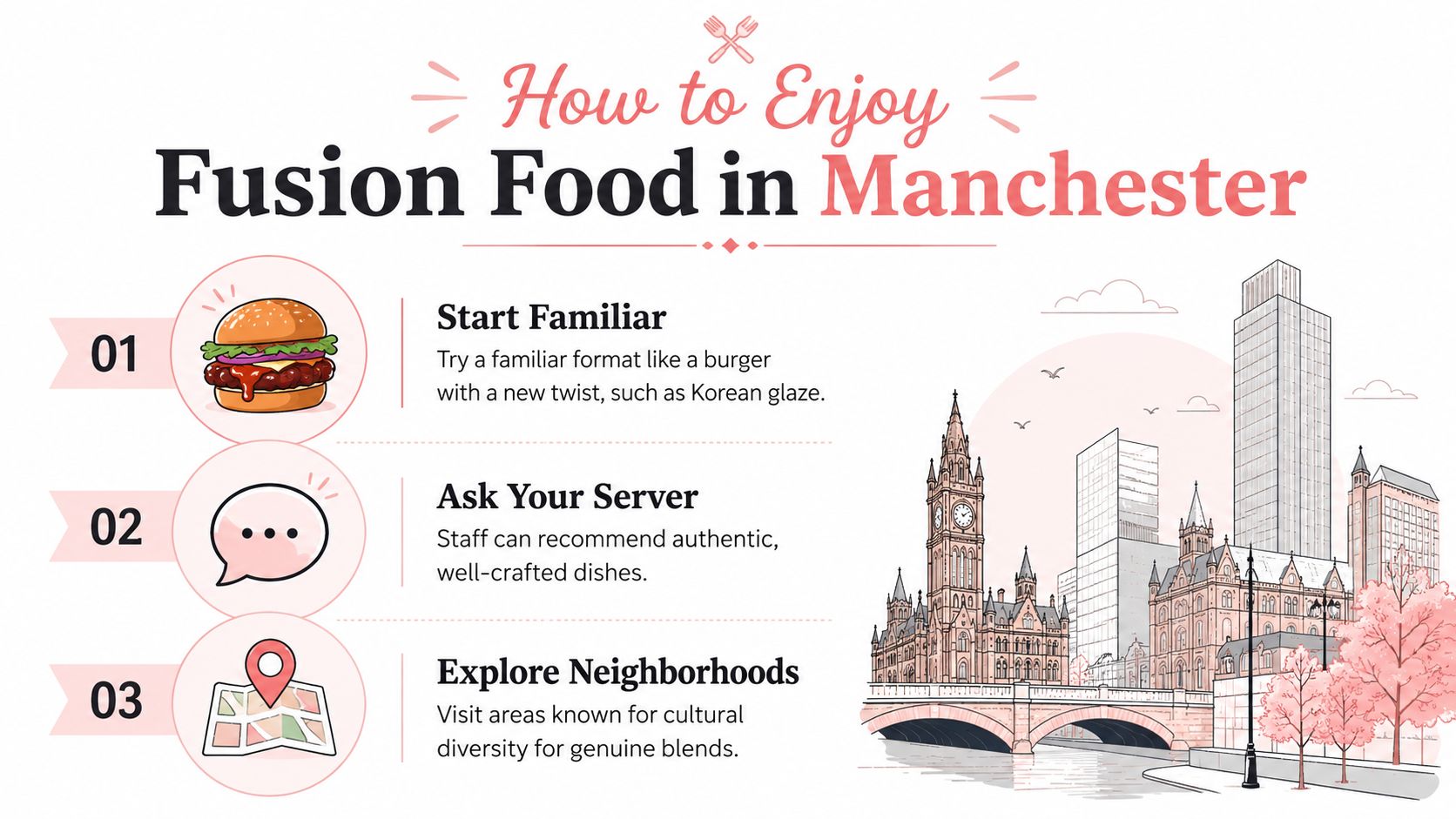
Start with a familiar format wearing a new flavour. A Korean-glazed burger, a masala-spiced brunch, or a pizza with a sharper, more global topping list gives you a low-risk way in. Once you know how a kitchen handles balance, you can move towards bolder pairings.
Ordering with a bit more confidence
A few simple habits make the experience better.
- Ask about spice levels. A dish might sound adventurous, but you still want to know whether it's fiery, mild, or complex.
- Share small plates. Fusion menus often reward curiosity, and sharing lets you compare flavours without overcommitting.
- Try one unfamiliar thing per visit. That keeps the meal fun instead of overwhelming.
- Notice the base format. If you already like the structure, you've got a better chance of enjoying the twist.
Home cooking is a good playground too. A little miso in a cheese toastie adds depth. Harissa on roasted veg brings heat without much effort. Small swaps like those teach you how fusion works without turning dinner into a science project.
Manchester makes this easy because independent venues are spread across neighbourhoods that already reward wandering. Think about food walks through places where you'll find a mix of cafés, bakeries, small restaurants, and late-opening kitchens, then build a route around one idea, maybe brunch, dumplings, or comfort food with a twist.
The smartest way to do it is as a themed tasting journey, not a random crawl. Pick two or three spots, link them by a neighbourhood walk, and let the flavours do the storytelling. That's the kind of city eating that suits curious locals, visitors, and anyone who wants a food-led day out with a bit of movement built in.
For route ideas and neighbourhood-style food outings, Food Escapes' Manchester food experiences guide fits the way many people now want to eat the city, one good stop at a time.
Wrapping Up With a Fork and an Open Mind
The next time you order something unexpected, you have a useful way to judge it. Ask whether the flavours work together, whether the ingredients have been handled with care, and whether the dish offers more than a surprising name.
Fusion food works best when it is thoughtful. Influences from different places should meet on the same plate with purpose, while the dish still feels enjoyable and recognisable enough to make sense. A new combination can be adventurous without becoming a novelty built only for attention.
Manchester gives you plenty of chances to test that idea. An independent kitchen might serve a Korean taco, a jerk bao, or a curry flatbread, each using a familiar format to carry flavours from somewhere else. A dessert that feels like Manchester by way of Lima can work for the same reason: the contrast creates curiosity, but the flavours still need to belong together.
Try one dish as a small experiment on your next restaurant, takeaway, or market visit. Choose an ingredient you rarely order, then judge the balance, texture, and care behind the combination. If it makes the meal more enjoyable, you have found fusion with a point of view.
For a food-led day out, Food Escapes turns Manchester into a guided adventure through independent spots, clues, and shared discoveries. It offers a playful way to explore the city's appetite for unexpected combinations, one stop at a time.

0 comments